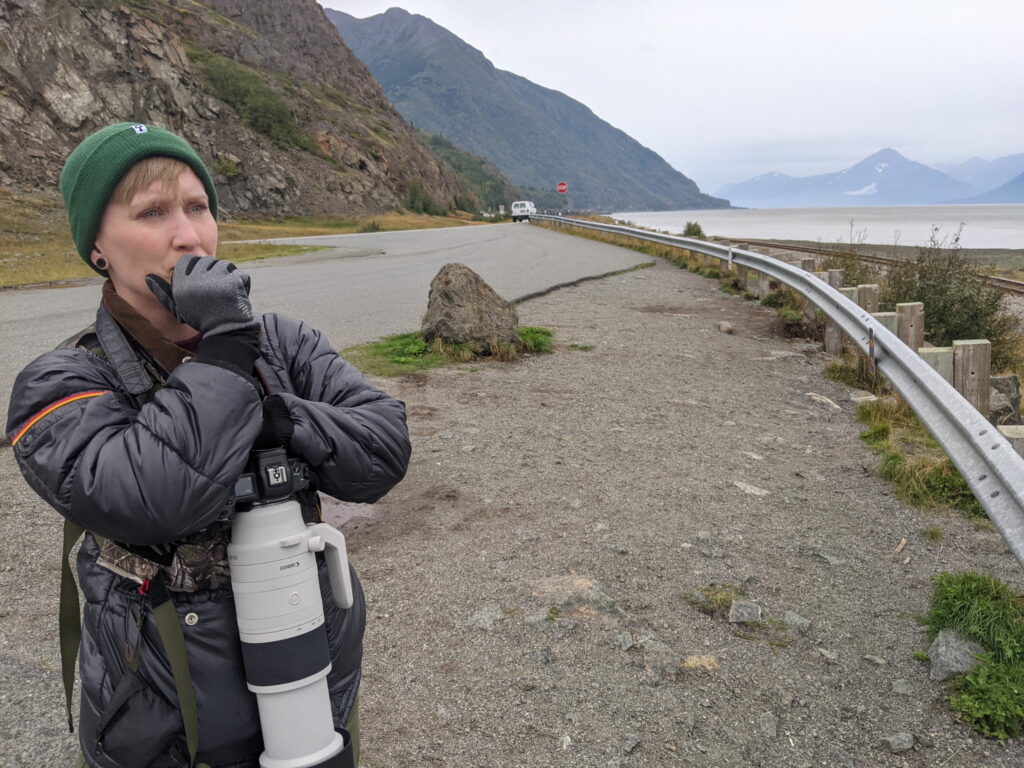

KENAI PENINSULA, Alaska — My latest story – and first for Sierra – is a news feature about brand new wildlife crossings being built into a major infrastructure project on the Kenai Peninsula in Alaska to help with the pervasive moose-vehicle collision problem in the region. Come behind the scenes with me.
Read the full story on Sierra → A Road Less Deadly: Can Alaska’s new Kenai Peninsula wildlife crossings save moose?
Behind the Story
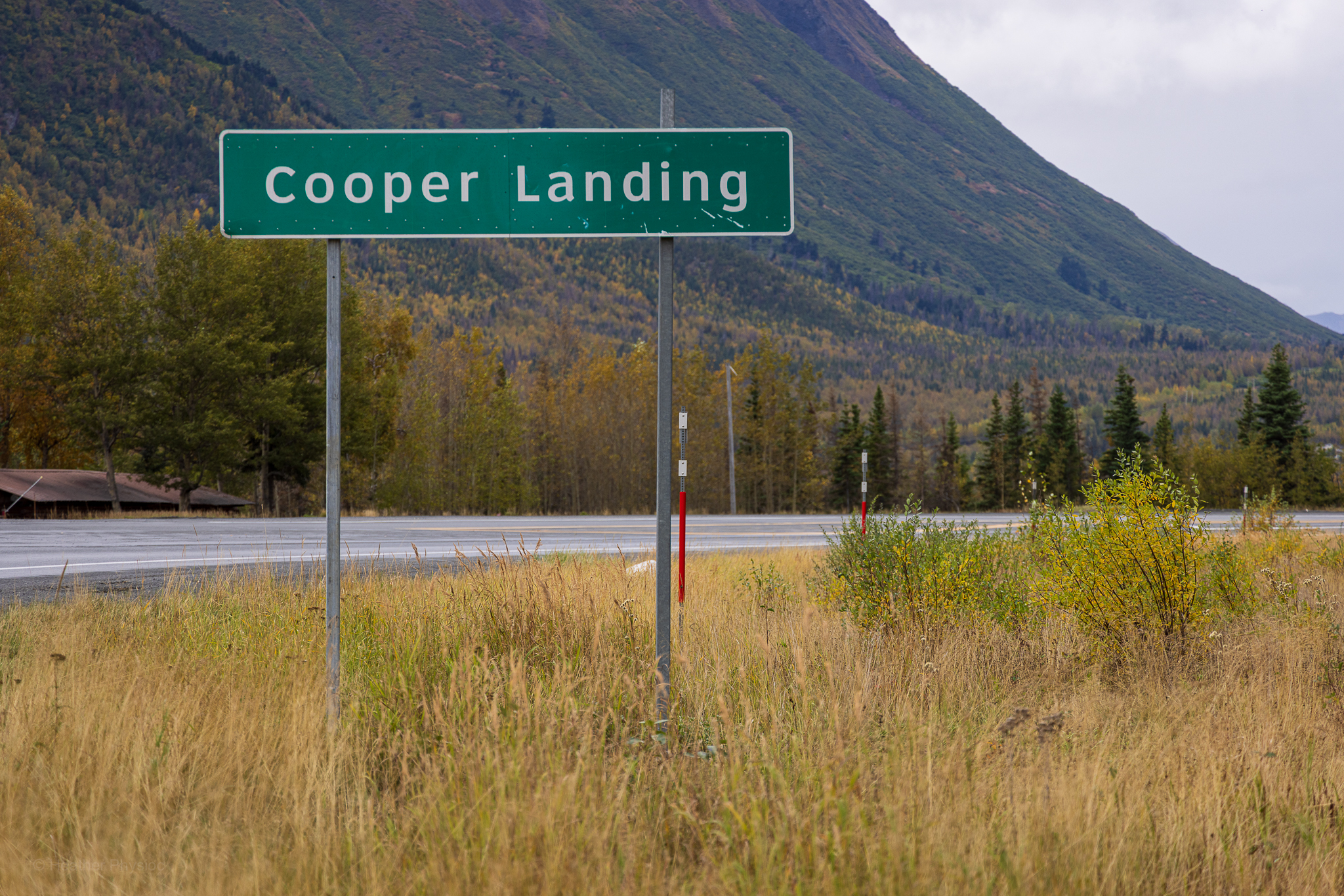
It’s an overcast day typical of autumn on the Kenai Peninsula with dense spruce-birch forest and mountain slopes framing my view as I wind around the curves of the Sterling Highway near the small river town of Cooper Landing. Rain drizzled intermittently on the windshield, and the green mile markers inched up—47, 48, 49—along a stretch of highway identified as one of the area’s most dangerous for wildlife-vehicle collisions.
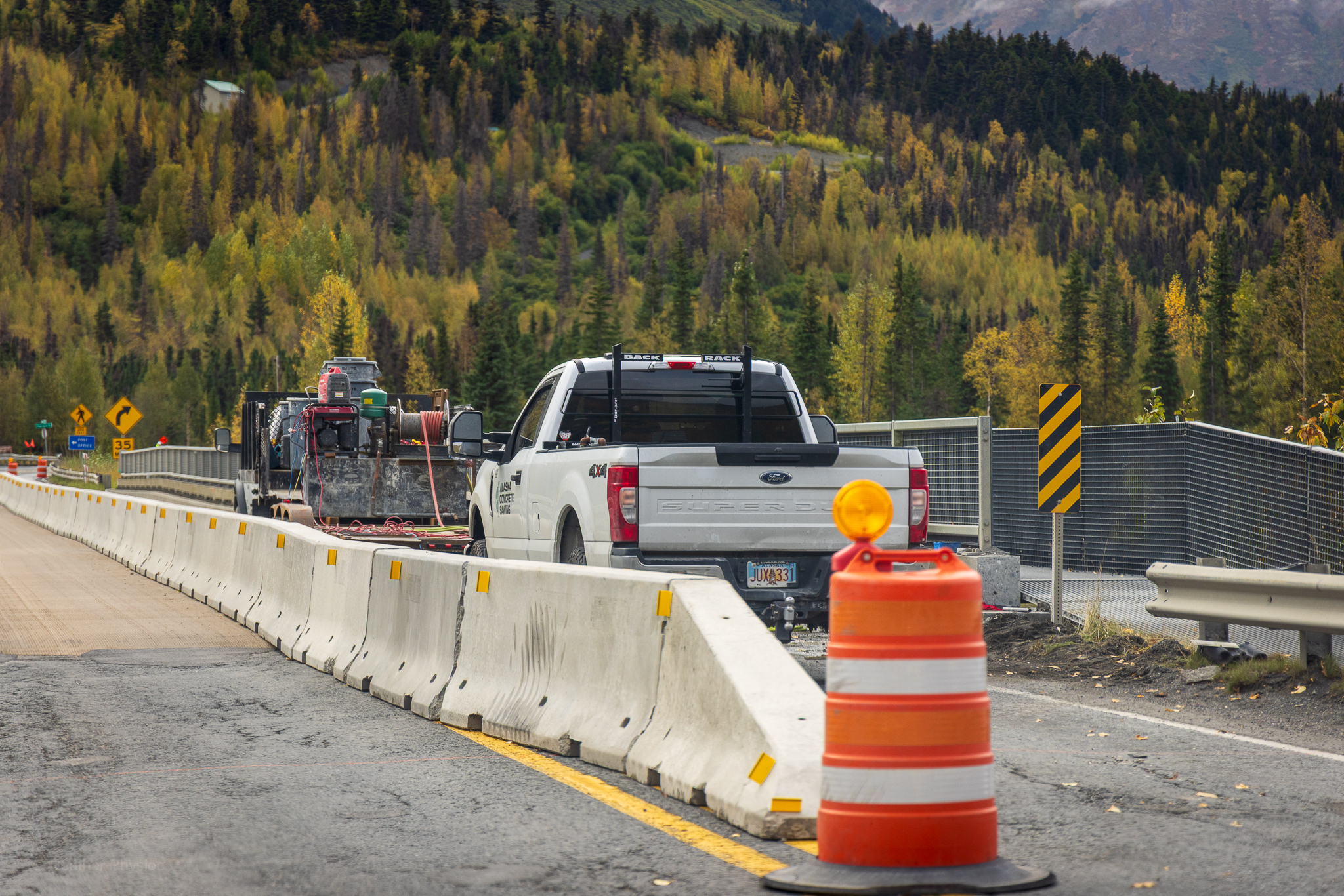
I scanned the shoulders of the Sterling Highway in search of my target. Unlike at home, spotting orange traffic cones and reductions to single-lane, one-way movement makes me perk up. These telltale signs of construction indicate I’m getting closer to one of the new wildlife underpasses built into the Sterling Highway to help moose, bear, caribou, lynx, and many smaller wildlife species cross safely under the road.
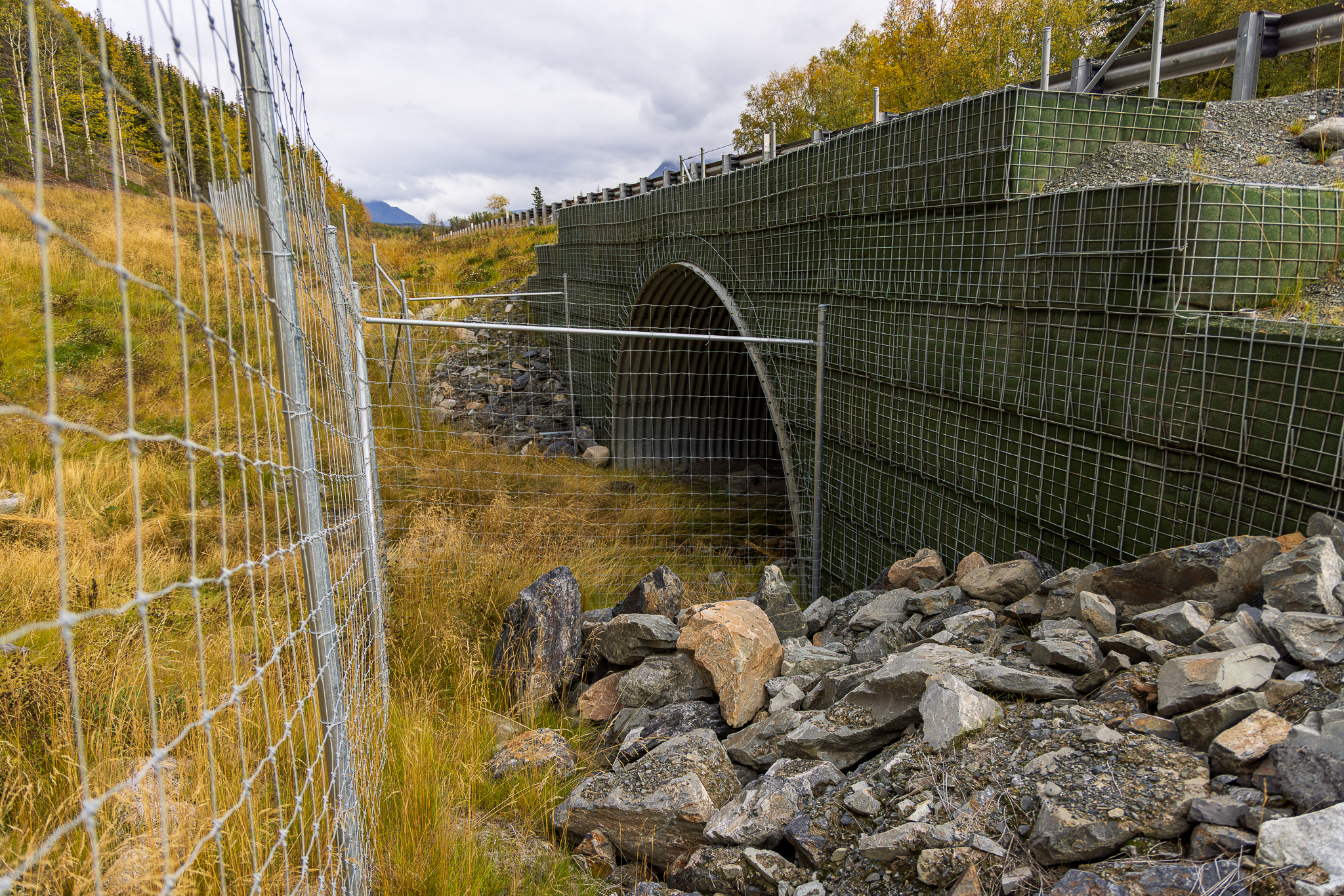
I spotted the grid-like fencing behind the guard rails, and pulled the car to the side of the road, flipping on my flashers. The fence lining the Sterling Highway starts at about one foot off the ground to allow smaller animals to pass underneath, and reaches eight feet tall to keep out animals like deer and moose. It features seven-foot vertical drops at “jump-out” points every eighth of a mile, crucial for preventing bear and moose from returning to the corridor. I walked down the embankment along the fence line until the fencing makes a 90-degree bend and connects to a cylindrical culvert, surrounded by large boulders.
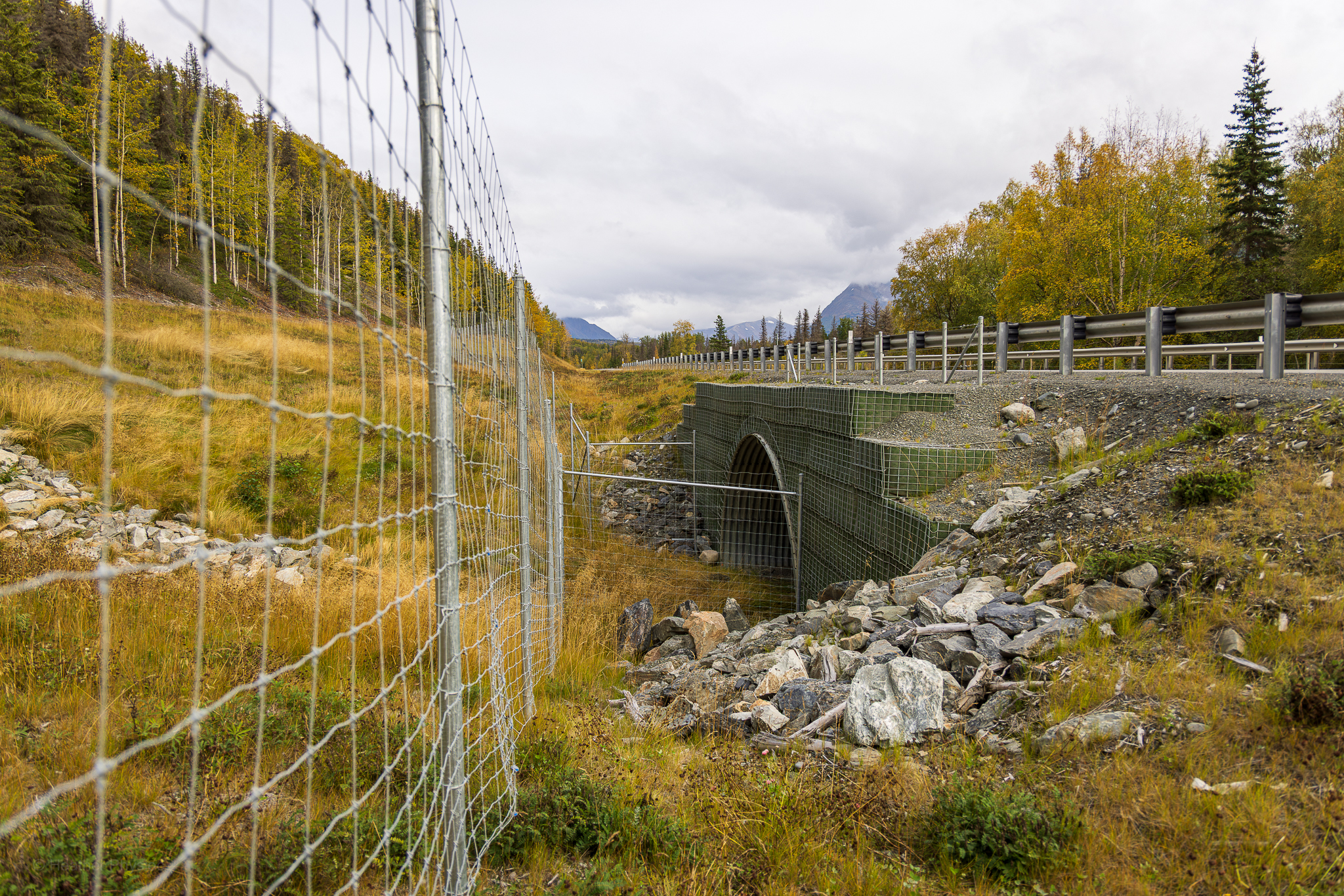
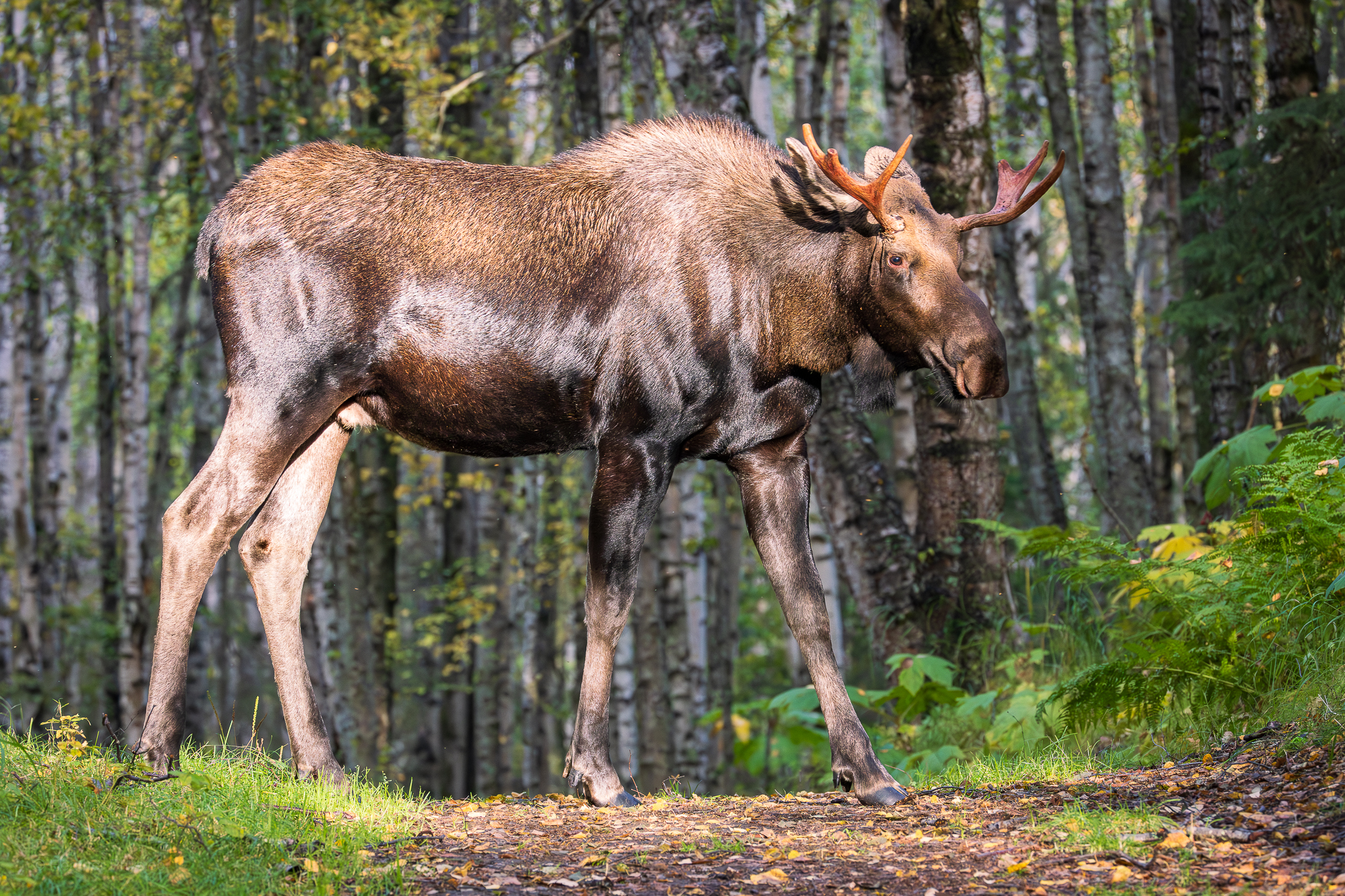
These culverts, cemented into the ground under the roadway, serve as wildlife underpasses. The culverts must be at least 16 feet high here to accommodate Alaska’s moose, which are larger than those in the lower 48. In fact, Alaskan bull moose can be about 30% larger, with some males reaching 1,600 pounds and 7 feet tall. It’s no surprise that collisions with these giant creatures are both costly and deadly for wildlife and travelers.
Encountering a bull moose crossing the road in front of my rented SUV within 24 hours of my own arrival in Anchorage cemented the importance of reporting a story like this one. I spoke with biologists, conservationists, moose hunters, fishing guides and locals about the conservation opportunities and obstacles behind the project, and what it takes to create solutions that enable humans and wildlife to more successfully co-exist.
Read the full story on Sierra → A Road Less Deadly: Can Alaska’s new Kenai Peninsula wildlife crossings save moose?
About Sierra
This is my first feature for Sierra. My editor was Lindsey Botts (Website, Bluesky), who helped me draw out the best in the story.
Sierra Magazine is the storytelling arm of Sierra Club, publishes national print and digital journalism focused on nature conservation, environmental justice, and protecting the wild world. Through rigorous reporting, compelling imagery and thoughtful storytelling, the magazine informs public discourse, elevates community voices, and drives accountability for the planet’s wild places.
It’s an honor to write and photograph for a magazine associated with the Sierra Club, which for more than 130 years has worked to advance conservation by protecting wild lands, shaping environmental policy, and mobilizing grassroots action across the United States.
Photos from the Field
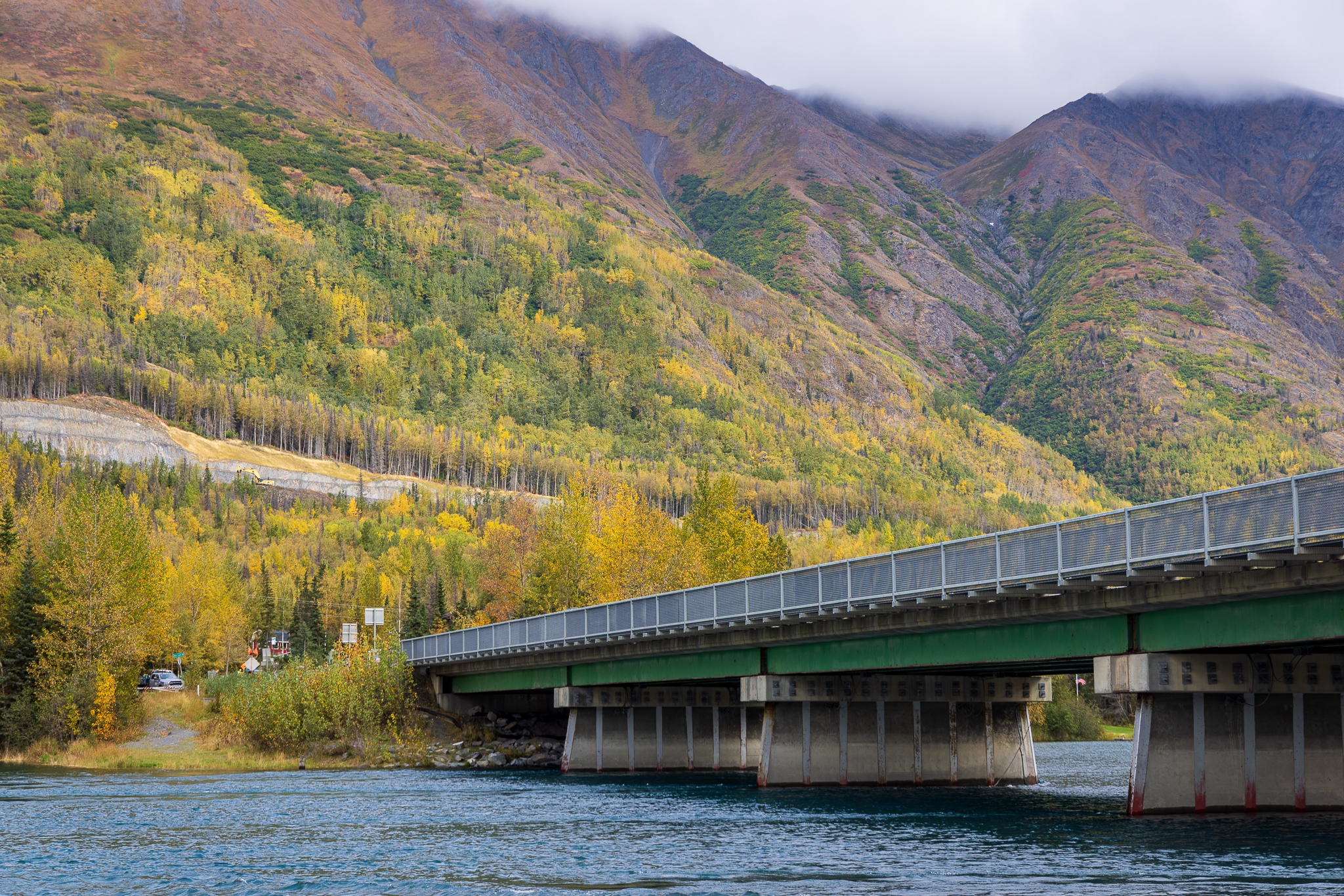
Browse this gallery of photos from reporting the story in the field to see more.


Videos from the Field
Sources
Interviews
- Daletas, Scotty. 2025. Email interview. September 27, 2025.
- Kenaitze Indian Tribe. 2025. Written statement in response to media inquiry. October 7, 2025.
- Morton, John. 2025. Live interview via Google Meet. September 26, 2025.
- Schmitt, Nicole. 2025. Live interview via Google Meet. September 19, 2025.
- Tymick, Jonathan. 2025. Email interview. October 6, 2025.
Reports
- Abaza, Osama, and Colleen C. Moran. 2021. Analysis of Moose–Vehicle Collision Countermeasures in Northern Climates. Transportation Safety and Environment 3 (3): tdab009. https://doi.org/10.1093/tse/tdab009.
- Abraham, Joel O., and Matthew A. Mumma. 2021. “Elevated Wildlife–Vehicle Collision Rates During the COVID-19 Pandemic.” Scientific Reports 11 (20391). https://doi.org/10.1038/s41598-021-99233-9.
- Alaska Department of Transportation and Public Facilities. 2021. Sterling Safety Corridor Improvements, MP 82.5 to 94: Final Environmental Assessment. Federal No. 0A33026 / State No. CFHWY00130. December 2021.
- Balčiauskas, Linas, Andrius Kučas, and Laima Balčiauskienė. 2025. “A Review of Wildlife–Vehicle Collisions: A Multidisciplinary Path to Sustainable Transportation and Wildlife Protection.” Sustainability 17 (4644). https://doi.org/10.3390/su17104644.
- Cunningham, Calum X., Glen E. Liston, Adele K. Reinking, Natalie T. Boelman, Todd J. Brinkman, Kyle Joly, Mark Hebblewhite, Stan Boutin, Sophie Czetwertynski, Leonard E. Sielecki, and Laura R. Prugh. 2022. “Human and Animal Movements Combine with Snow to Increase Moose–Vehicle Collisions in Winter.” Environmental Research Letters 17 (125007). https://doi.org/10.1088/1748-9326/aca8bf.
- Ernst, Richard, Jeff Selinger, Jim Childers, Dale Lewis, Gary Olson, and Lt. Steve Bear. 2007. Wildlife Mitigation and Human Safety for Sterling Highway MP 58–79, Kenai Peninsula, Alaska. U.S. Fish and Wildlife Service / Alaska Department of Fish & Game / Alaska DOT&PF.
- McDonald, Lucian R., Terry A. Messmer, and Michael R. Guttery. 2019. “Temporal Variation of Moose–Vehicle Collisions in Alaska.” Human–Wildlife Interactions 13 (3): 382–393.
- Suring, Lowell H., James S. Begley, and William L. Gaines. 2017. “Movement Patterns and Potential Corridors for Brown Bears on the Kenai Peninsula, Alaska.” In Habitat Use and Movement Patterns of Focal Species on the Kenai Peninsula, Alaska, USA, Chapter 3. Northern Ecologic LLC / Washington Conservation Science Institute.
Government Materials
- Alaska Department of Transportation & Public Facilities (DOT&PF). 2019–2024. Sterling Highway MP 45–60 Project Materials — including public-meeting boards, roll plots (Phases 1A, 1B, 2–5), project fact sheets, FAQs, mitigation summaries, and open-house presentations from 2019, 2020, 2021, 2023, and 2024.
- Alaska Department of Transportation & Public Facilities (DOT&PF). 2021. Sterling Safety Corridor Improvements, MP 82.5–94: Final Environmental Assessment. December 2021.
- Federal Highway Administration (FHWA) and Alaska DOT&PF. 2018. Sterling Highway MP 45–60 Final Environmental Impact Statement, Chapter 3.26: Irreversible and Irretrievable Commitments of Resources.
- U.S. Forest Service (USFS). 2018. Notice of Proposed Amendment to the Chugach National Forest Land Management Plan.
Federal Register 83(189). Gov Document – 2018-21153 - Alaska Legislature. n.d. Memo RC 39–44. Gov Document – Memo rc39-44
Technical Materials
- Ernst, Richard, Jeff Selinger, Jim Childers, et al. 2007. Wildlife Mitigation and Human Safety for Sterling Highway MP 58–79, Kenai Peninsula, Alaska. eScholarship, University of California.