
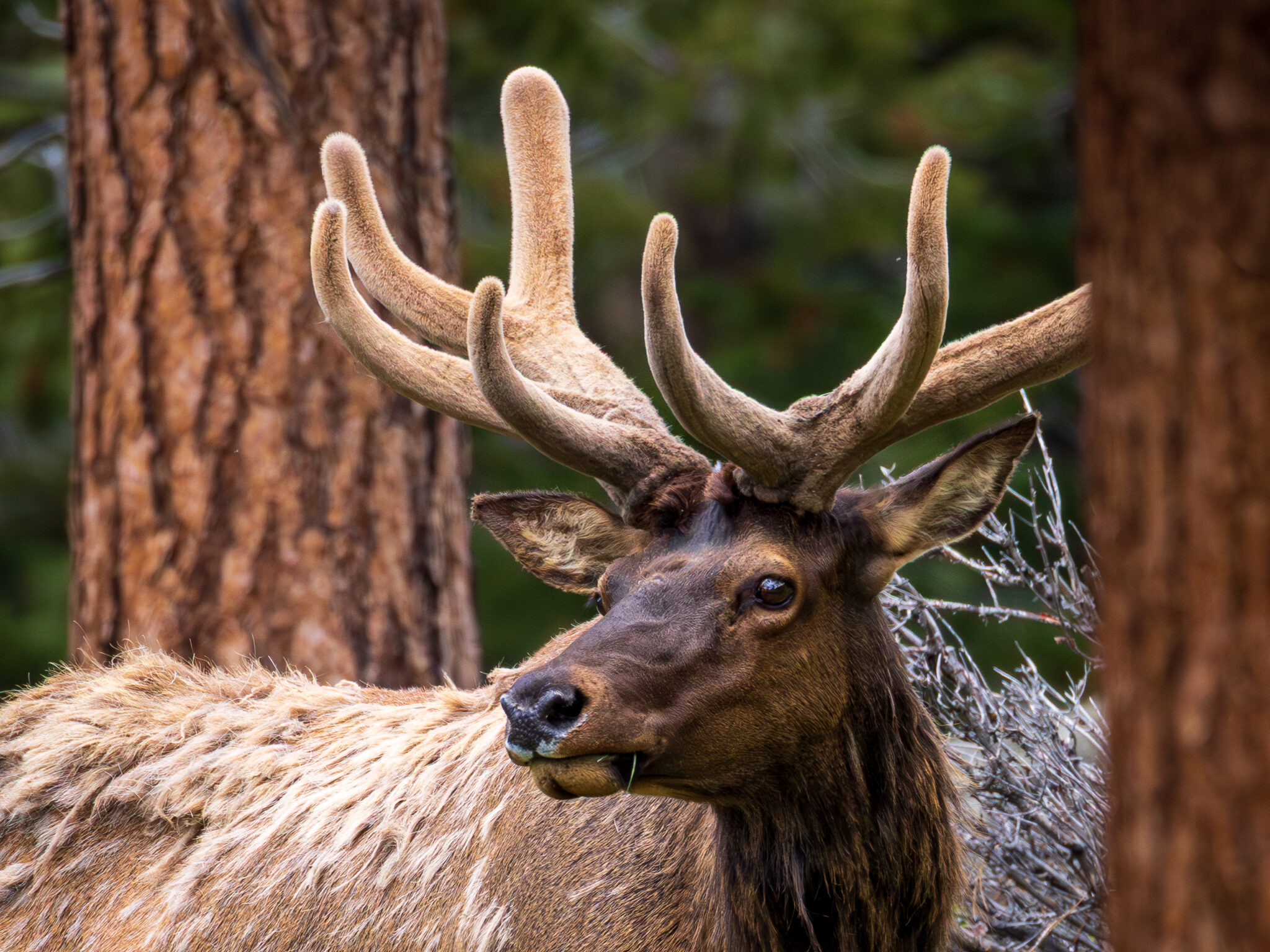
The sight and sound of a bugling bull elk, especially during the autumn rut, is one of the most celebrated and recognizable wildlife experiences in North America. They symbolize the majesty and rugged beauty of the continent’s wild spaces. For many Native American tribes, the elk (Wapiti) is a revered animal, central to ceremonies, spirituality, and sustenance.
Elk are a keystone species, vital to the health of the North American ecosystem. Elk act as landscape architects, promoting plant diversity and maintaining the balance between forests and meadows. As large prey, their presence supports predator populations and the scavengers that follow.
Millions of people travel annually to places like Yellowstone, Estes Park and the Canadian Rockies to witness and photograph the elk, supporting local economies along the way, through hotels, restaurants, and guided tours.
But this icon of the American wilderness was nearly silenced forever. In the early 1900s, its population had been reduced to a mere 1 percent of their historical numbers. Their story is one of great conservation pride, but one that once came at a cost of near-total collapse.
Species: Elk
Also Known As: American elk, Wapiti (derived from Shawnee and Cree words meaning “white rump”)
Quick Facts About the Elk
- Order: Artiodactyla (even-toed ungulates)
- Family: Cervidae (deer)
- Genus: Cervus
- Species: Cervus canadensis
- Subspecies & Varieties:
- Rocky Mountain (C. c. nelsoni)
- Roosevelt (C. c. Roosevelti)
- Tule (C. c. nannodes)
- Manitoban (C. c. manitobensis)
- Extinct varieties: Eastern and Merriam’s
- Size & Weight: Bulls range from 700 to 1,100 lb. on the high end, and around 5 ft. tall at the shoulder. Cows range from 500 to 600 pounds, and reach about 4.5 ft. tall at the shoulder.
- Lifespan: 10 to 13 years in the wild
- Diet: Herbivores. Primarily grazers, feeding on grasses, sedges, forbs. In winter, resort to aspen bark, willow shoots, sagebrush. Their four-chambered stomach allows them to digest tough cellulose.
- Natural Predators: Gray wolves, grizzly bears, black bears, mountain lions, coyotes.
- Symbiotic Species: Ravens and magpies scavenge elk kill sites. Beavers create riparian habitats that elk use.
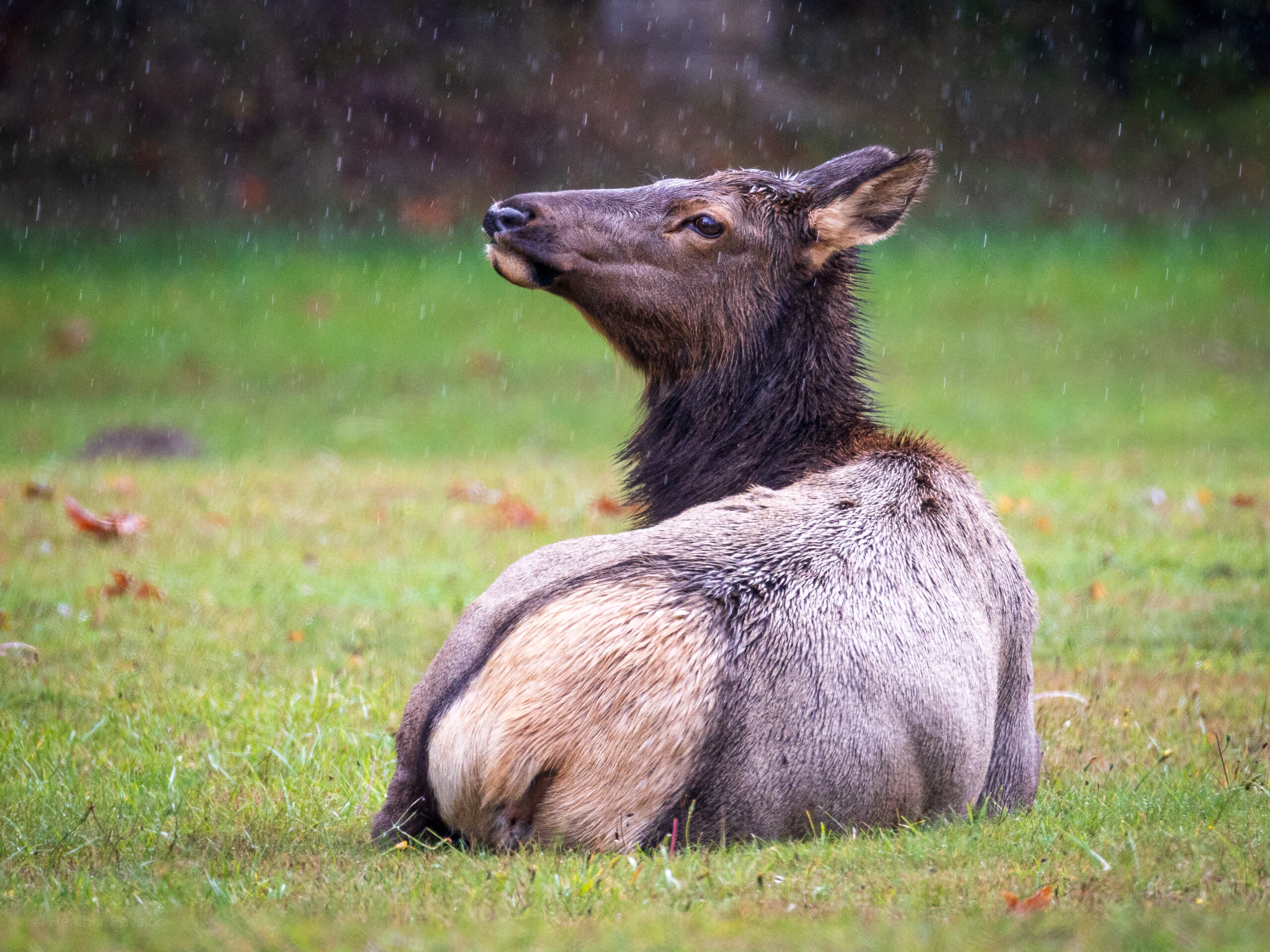
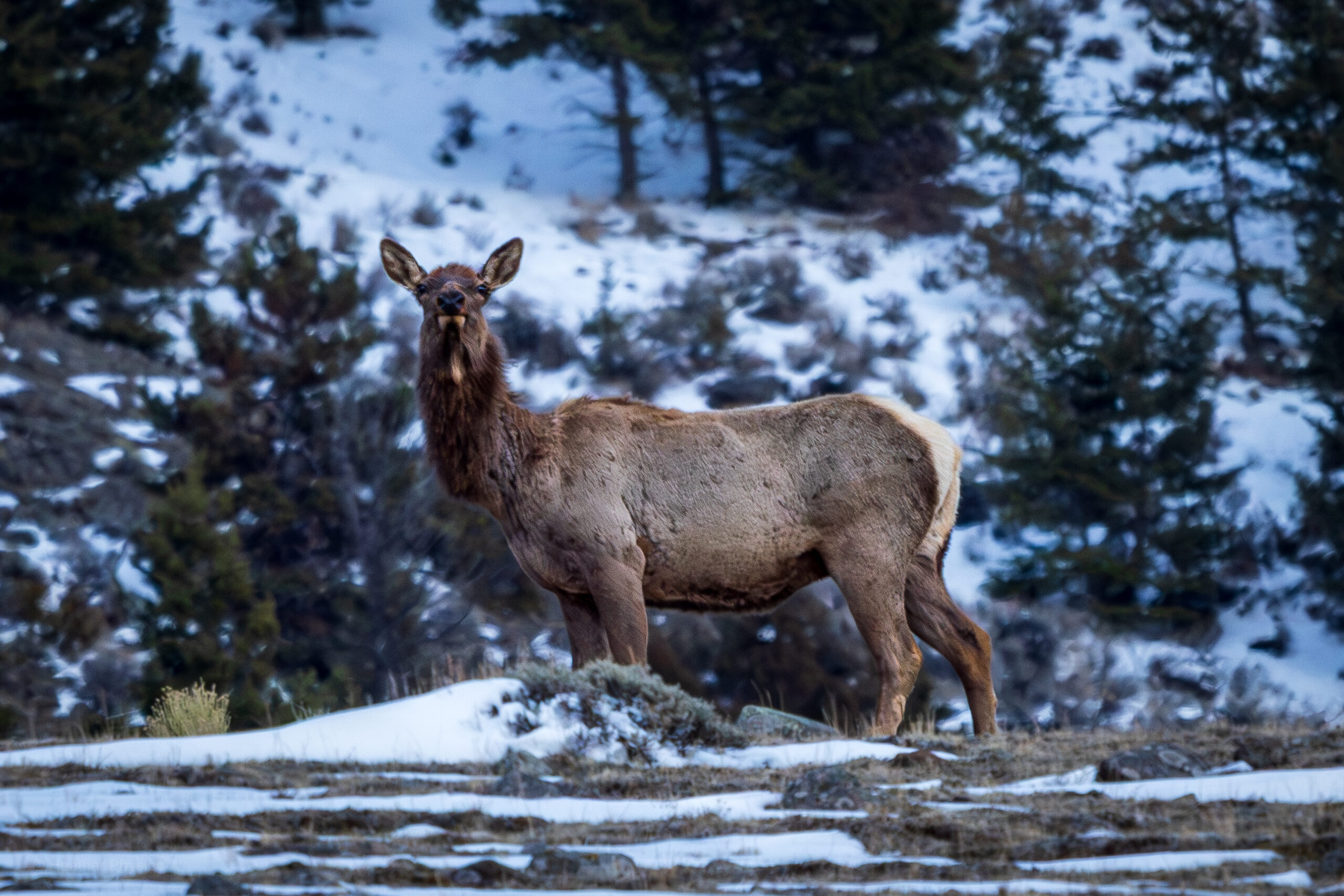
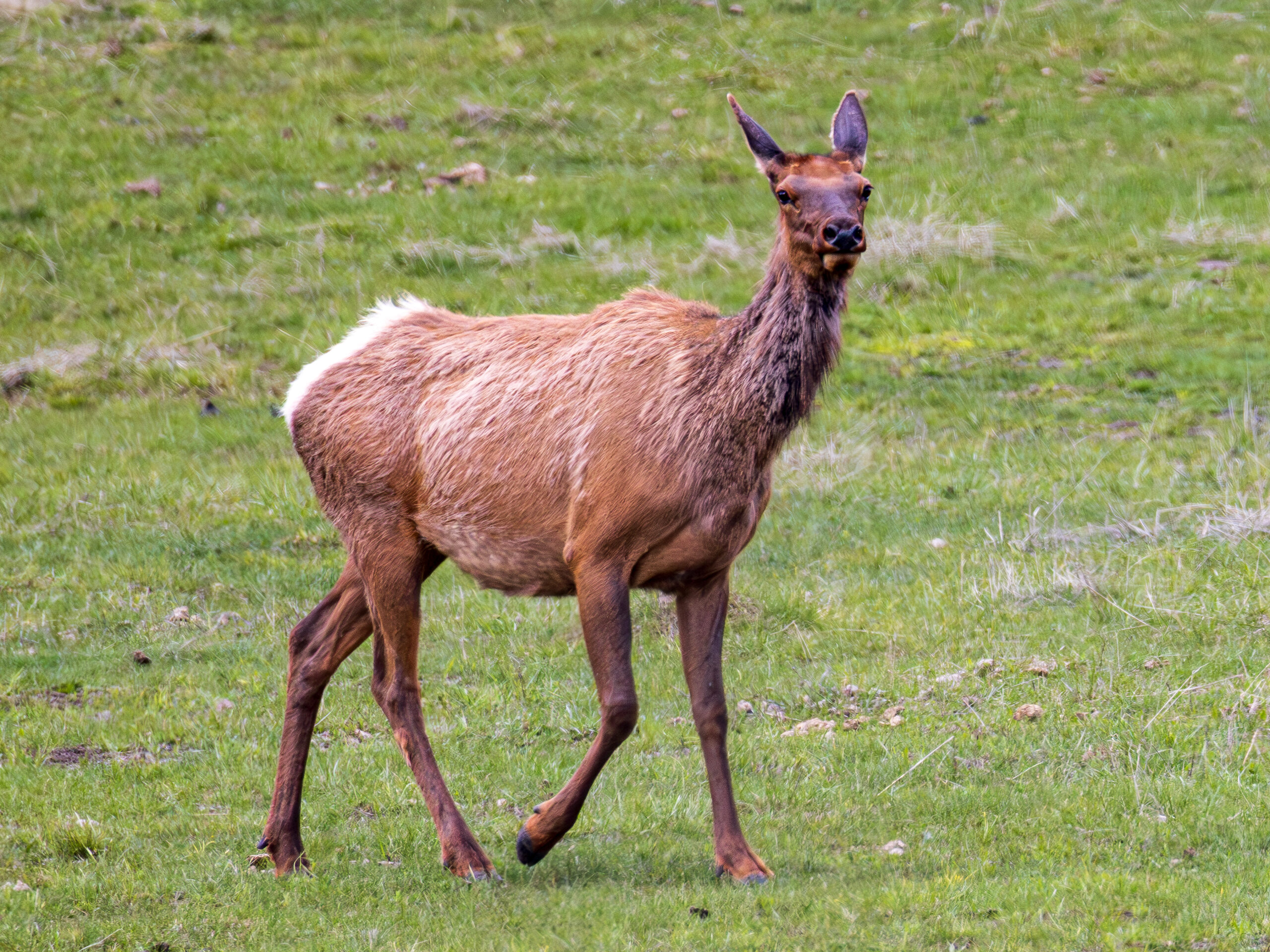
- Appearance: Dark brown mane and neck distinct from their tan body, with a large, lighter rump patch that gives it the Wapiti name. Thick, hollow-haired coat provides insulation in winter; sheds to a sleek copper coat in winter.
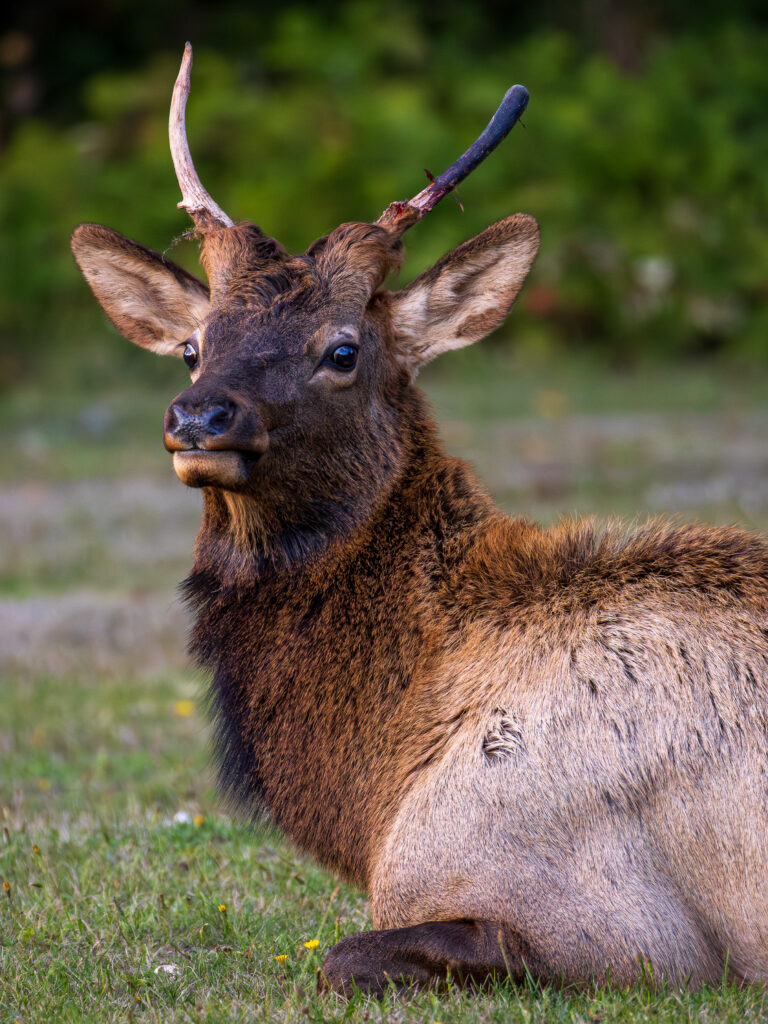
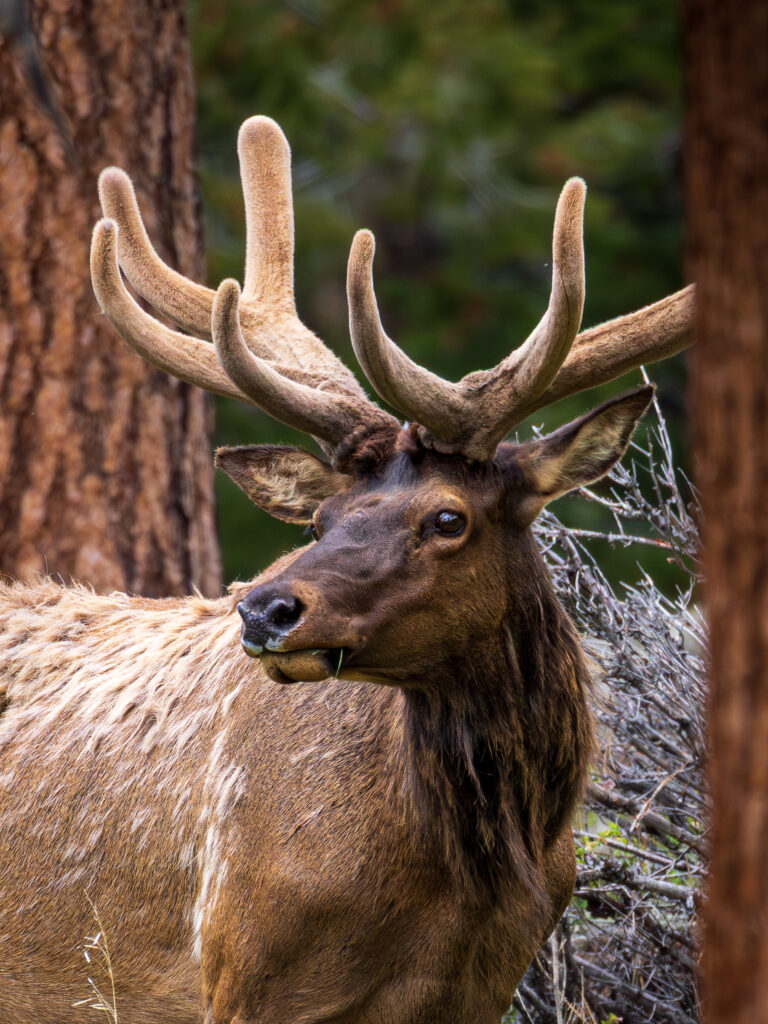
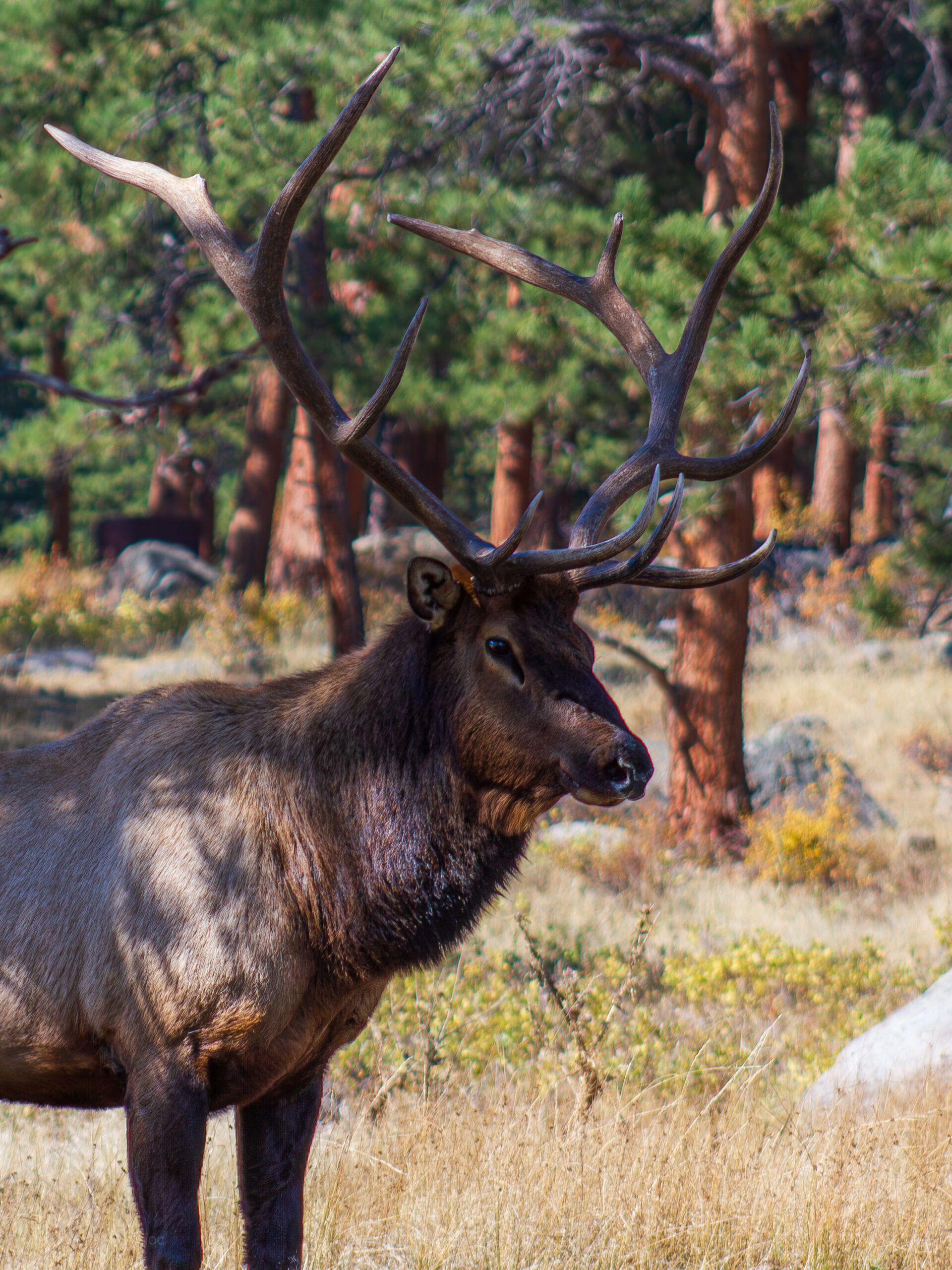
- Antlers: Bulls have bone antlers that shed annually in late winter. They can grow up to 1 inch per day in the velvet stage.
Elk Range & Habitat

- Current Range: Primarily Western North America (Rockies, Cascades, Sierra Nevada). Successfully reintroduced to Eastern states including Kentucky, Tennessee, Pennsylvania, and Wisconsin.
- Origin: Crossed the Bering Land Bridge (Beringia) from Asia during the Pleistocene.
- Habitat: Highly adaptable “ecotone” species (thriving on edges). Prefers open woodlands, coniferous forests, aspen groves, and alpine meadows.
- Role in Landscape: By heavily grazing and browsing (eating grasses, shrubs, and tree bark), elk influence the type of vegetation that grows. This opens up clearings, promotes specific plant diversity, and maintains the balance between forests and meadows.
- Seasonal Migration: Seasonal altitudinal migration to follow the “green wave” of vegetation.
- Elevation Range: Spend summers in high alpine/subalpine meadows, up to 10,000+ feet, for the nutrient-rich forbs. They spend winters in lower valleys and foothills to escape deep snow and gain access dried grasses and shrubs.
Elk Mating
- Social Structure: Gregarious (herd animals) with matriarchal herds that consist of cows, calves and yearlings, led by an older cow, and bachelor groups of mature bulls in smaller bands outside of breeding season.
- Sexual Maturity: About 1.5 to 2 years old, but bulls rarely breed until dominating a harem at around 4 to 6 years old
- Mating System: Polygynous (one bull breeds with a “harem” of many cows)
- Mating Season: The “Rut” occurs in September and October
- Courtship: Bulls bugle to challenge rivals and herd cows. Behaviors include “sparring” (antler wrestling), “raking” (tree rubbing), and wallowing in mud or urine to scent-mark.
Elk Reproduction
- Gestation: About 240 to 260 days.
- Calving: Calving occurs in late May/June. Cows typically give birth to one calf per year; twins are extremely rare. The calves remain with the cow until the next spring when they give birth again.
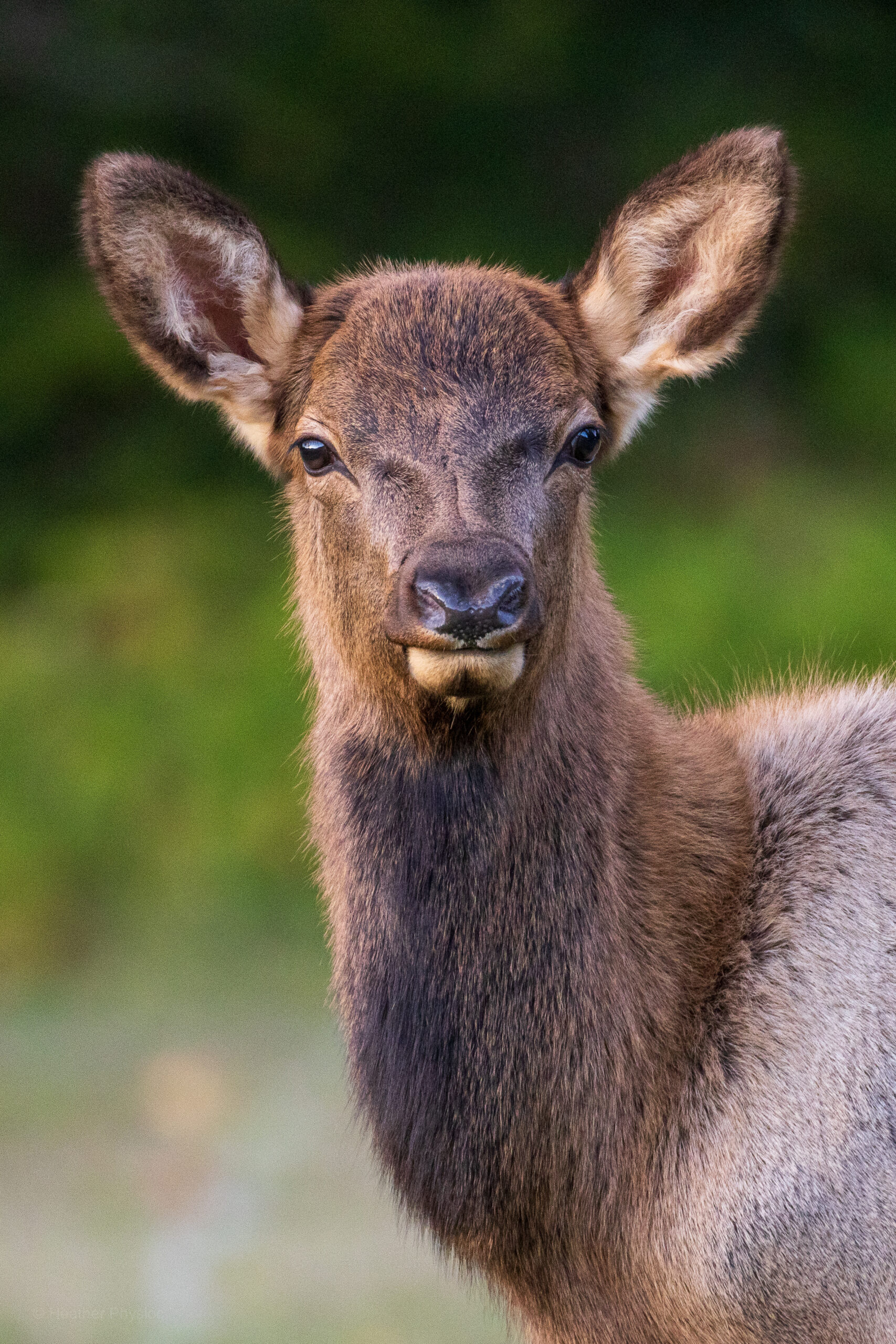
- Calves At Birth: Calves weigh about 30 to 40 pounds at birth. They’re born with a reddish-brown coat and white spots for camouflage. They can stand and nurse within 30 to 60 minutes of being born. Crucially, they are also born scentless, which is a vital defense against predators during their “hiding phase,” when they instinctively remain motionless while the cow feeds nearby.
- Nursery Groups: Once the calf is strong enough (typically 7 to 14 days old), the cow and calf rejoin the herd. The cows often form “nursery groups” where one or two mothers may act as “babysitters” while others feed.
- Nursing: Calves grow rapidly, sometimes gaining over a pound per day, thanks to their mother’s rich, fatty milk. They typically wean from their mothers around 6 to 8 months of age, in the late fall or early winter.
- Foraging: While milk is the sole food source for the first few weeks, calves begin nibbling on grass and other vegetation as early as 3 weeks old. This helps develop their rumen (the specialized stomach chamber for digesting plants).
Elk Conservation Status
“Least Concern,” “Increasing”
(Last assessed by the IUCN in 2015)
Once numbered in the tens of millions, elk went from one of the most abundant large mammals in North America, to a species that was nearly wiped out in much of its range after European colonization. Settlement, habitat loss, unregulated market hunting, and competition with livestock extirpated elk from most eastern states. Some estimates put the population as low as 50,000 animals left by the late 1800s to early 1900s.
Alarm over disappearing big game spurred new game laws, national parks and refuges, a ban on market hunting, and dedicated federal funding. Today, the elk population is about 1 million and growing geographically. Though a conservation success, active management is still required to sustain the current population, which is much smaller than its historical peak.
Elk Conservation Efforts
- The Pittman-Robertson Act (1937), funded by an excise tax on firearms and ammunition, dedicates money to states for wildlife management and habitat work. This funding allowed state agencies to hire staff, acquire habitat, conduct research, and enforce hunting regulations, stabilizing elk and other game populations by replacing unregulated market hunting with limited, regulated sport hunting.
- Agencies used these funds, along with state dollars, to acquire and improve millions of acres of habitat for elk. Since 1984, the Rocky Mountain Elk Foundation has further enhanced this by conserving and improving over 9 million acres through land purchases, easements, and restoration efforts.
- From the early-to-mid 20th century, states successfully translocated and reintroduced elk from Western herds into vacant historic range in the Midwest and East.
- Today’s elk population is generally healthy, though reintroduced Eastern herds may have lower genetic diversity (“founder effects”). Long-term management plans ensure these restored herds remain viable and socially acceptable.
- Citizen science and community elk monitoring programs also lend a hand. For example, Snapshot Wisconsin, where volunteers classify trail cam photos to track reintroduced elk; iNaturalist, which uses user-uploaded, geotagged elk sightings to map range expansion; and Project OME (Olympic Mountain Elk), which specifically monitors Roosevelt elk on the Olympic Peninsula.
Key Threats to Elk Populations Today
- Chronic Wasting Disease (CWD) is a fatal disease affecting the nervous system.
- Roads and fences are fragmenting habitat and disrupting migration corridors.
- Land privatization and development are reducing winter range.
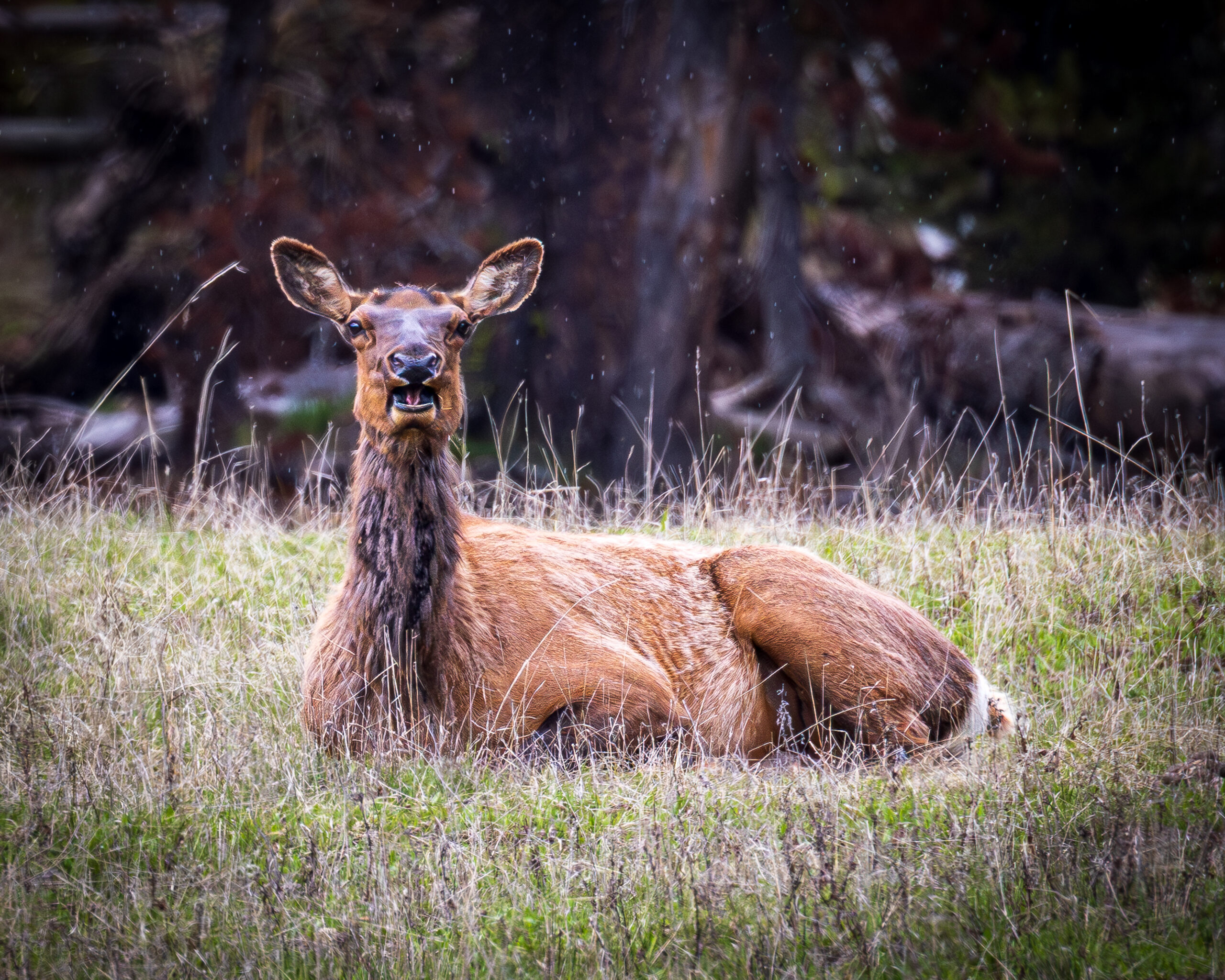
Wildlife Snapshot Infographic: Elk
The story of the elk (Wapiti) is as remarkable as the annual bugle that echoes through the mountains. This infographic offers a quick look at the Elk’s defining traits, conservation status, and vital role as a keystone species in North America’s forest and grassland ecosystems.

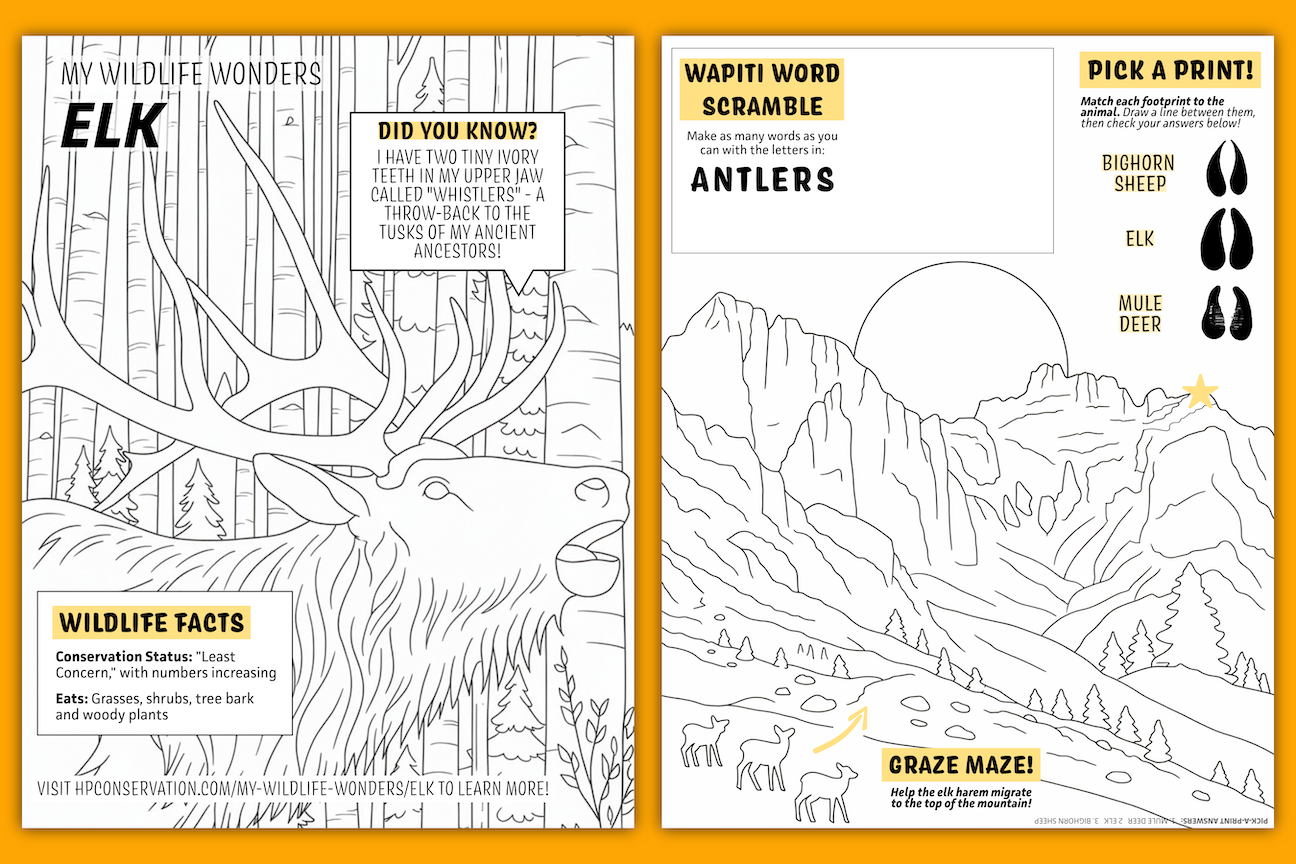
Elk Coloring Book Page & Learning Activity Sheets for Kids
Click below to download free, fun activities and coloring sheets for kids to enjoy and learn more about the Elk!
Sources (Alphabetical)
- Animal Diversity Web – Cervus elaphus
- Arkansas Game & Fish Commission – History of Elk in Arkansas
- Encyclopedia Britannica – Elk
- IUCN Red List of Threatened Species
- National Park Service – Elk
- National Park Service – Northern Yellowstone Elk
- NatureServe Explorer – Cervus canadensis
- OneEarth – Elk
- Rocky Mountain Elk Foundation
- U.S. Fish & Wildlife Service – National Elk Refuge


