
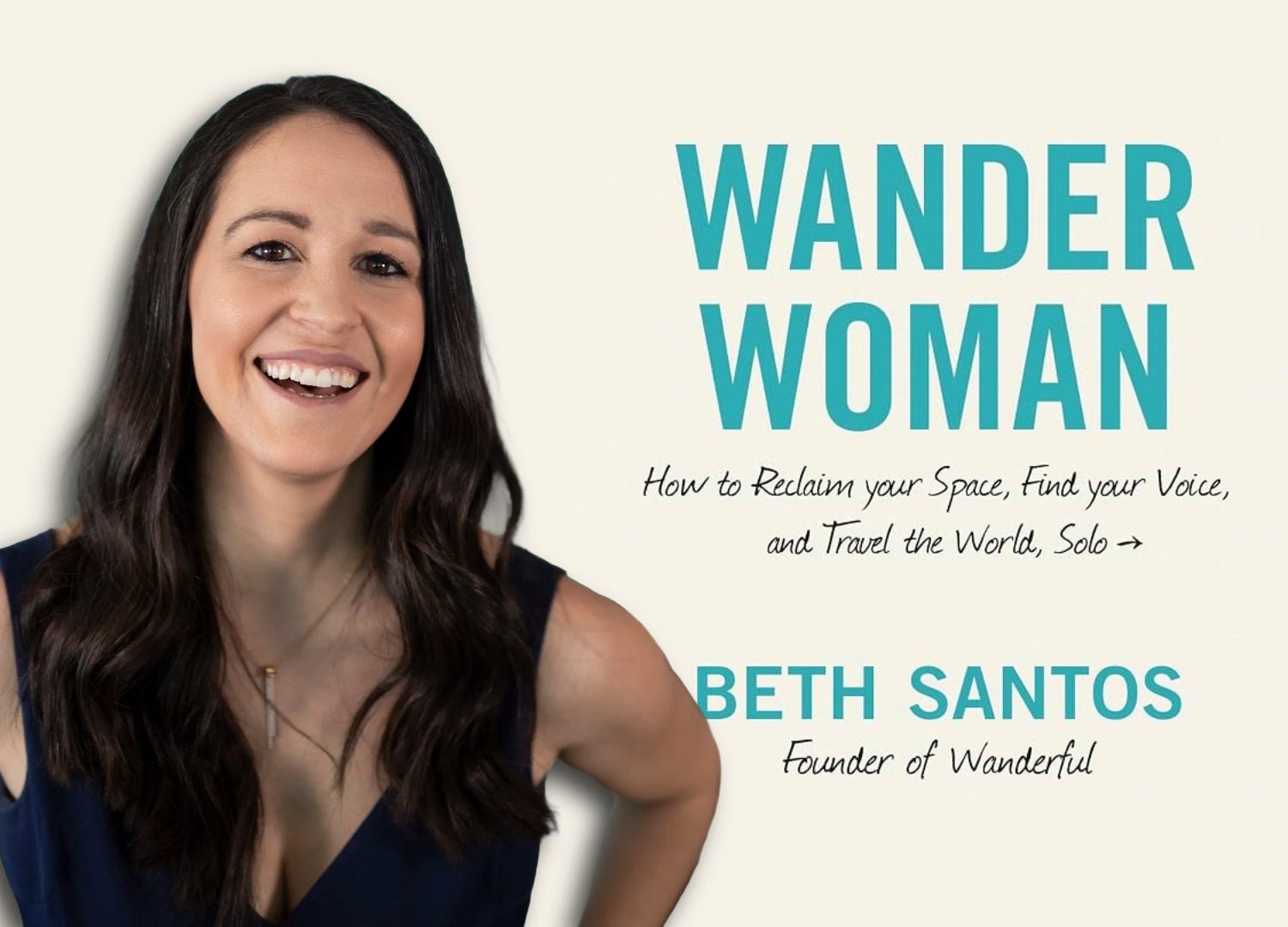
If you have ever wanted to travel alone but found yourself waiting for confidence, companionship or permission, this book may be for you. Wander Woman: How to Reclaim Your Space, Find Your Voice, and Travel the World, Solo, by Beth Santos, is both a practical guide and an argument for women moving through the world on their own terms. The book will be especially useful for someone working up the courage to take a first solo trip, but it is also validating for women who have already done it many times.
Santos, founder of the global women’s travel community Wanderful, challenges the idea that solo travel is reserved for women who are exceptionally fearless, independent or comfortable with uncertainty. Her message is more inclusive: “Travel is for everybody, and every body.”
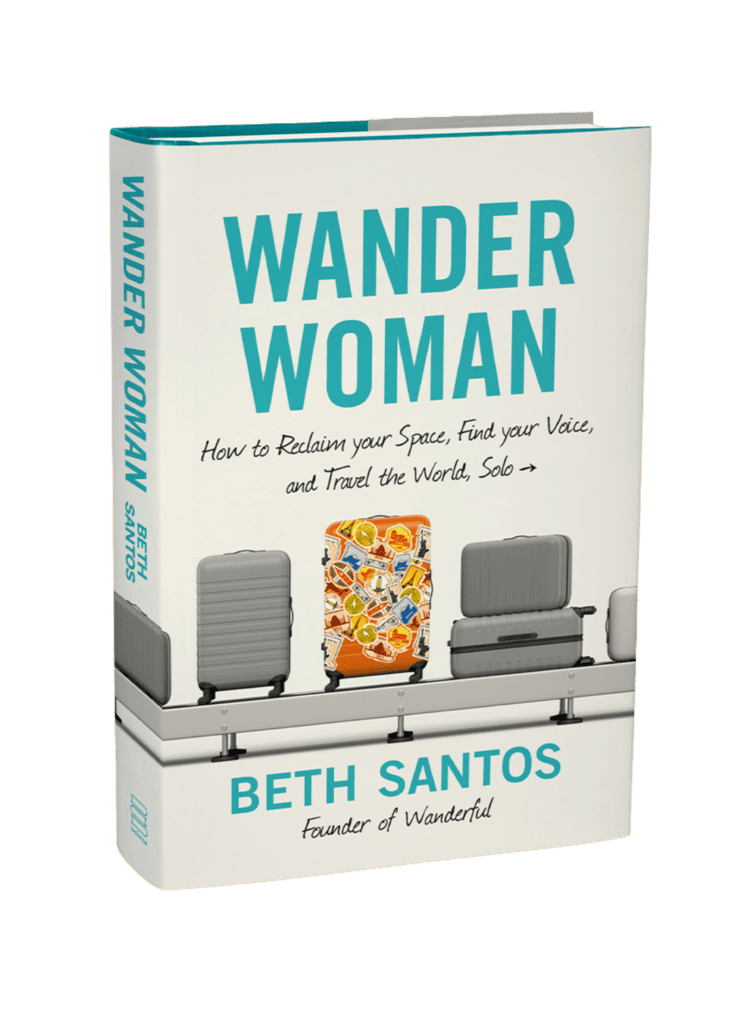
About the Book
In Wander Woman: How to Reclaim Your Space, Find Your Voice, and Travel the World, Solo (2024), Wanderful founder Beth Santos challenges fear-based assumptions about who can travel alone and what safety means for women. The book offers practical, reflective guidance for building confidence, finding community, and traveling more ethically and intentionally.
Buy the Book
I took my first solo trip almost 20 years ago while making my way out of a failing relationship; it was an effort to rediscover my own identity. I discovered that I genuinely enjoyed being alone, and that I was independent, resourceful and resilient enough to travel that way. Santos captures why these experiences can be so powerful: “Traveling alone is a gift we give ourselves. The act of traveling alone is an act of self-care.”
Since then, I have traveled solo for business, personal getaways and outdoor adventures including hiking, camping and backpacking – and I never looked back.
Wander Woman is part travel handbook, part personal-development guide and part examination of how and why women explore the world. Santos addresses practical concerns such as eating alone, packing efficiently, responding to unwanted attention, and my favorite – building a restorative “Day Zero” into an itinerary.
The Day Zero concept is something I already practice, albeit inconsistently: leaving room at the beginning of a trip to arrive, adjust and recover rather than immediately launching into a packed schedule. It is a small logistical choice that can improve the entire experience. This moment to get your bearings is especially valuable when traveling alone.
For experienced travelers, some of the practical guidance may feel familiar. But Santos is even more interested in how women approach solo travel. She questions the cultural messages that tell women they should not be alone, or that being alone means they must be lonely, unsafe or lacking something.
She also refuses to make confidence a prerequisite. Solo travel is often presented as the culmination of confidence and independence. Santos suggests it can also be how those qualities are developed. A traveler can begin with uncertainty, and allow the experience to reveal what she is capable of. “You don’t have to love yourself to travel alone,” Santos writes. “You don’t even have to like yourself.”
The book’s greatest value for me came from its reflection on ethical and intentional travel. “We impact an area environmentally by what we consume and how we choose to travel there,” Santos writes. “We make an impact financially by what we purchase and whom we purchase from. But we also make an impact sociopolitically, simply by choosing to be in the place at all.”
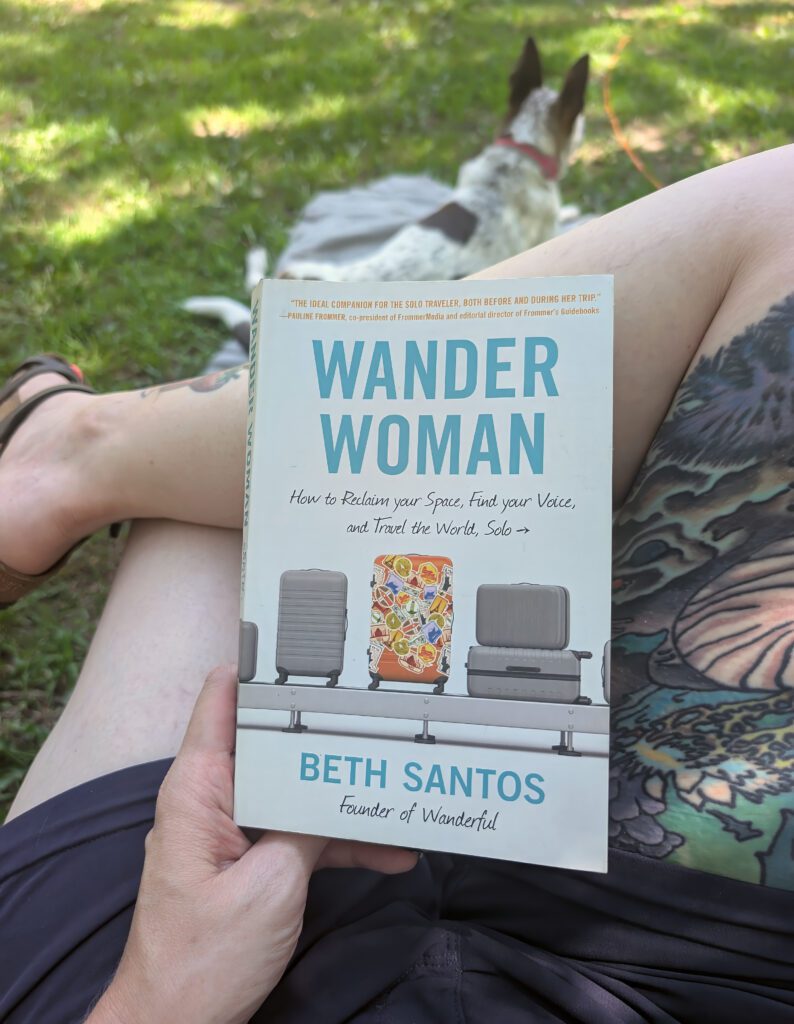
Travel is not neutral. Our decisions about transportation, lodging, food, recreation, wildlife experiences and spending affect the communities and environments we enter. Santos encourages travelers to pair curiosity with research, good intentions with humility, and personal discovery with responsibility. Her framework helped me think more deliberately about the travel choices I make, and how I can leave a lighter footprint wherever I go.
Ultimately, Wander Woman is not simply an invitation to travel alone. Instead, it asks readers to reconsider what travel is for, who it affects and how we might do it better. Throughout the book, reflection prompts ask readers what surprised them, what made them uncomfortable and what they learned about themselves and the places they visited. These questions make Wander Woman useful before, during and after a journey.
For women preparing to go alone, Wander Woman offers both reassurance and practical tools. For those who already know they can, it poses a more challenging question: How can we move through the world more thoughtfully?


