
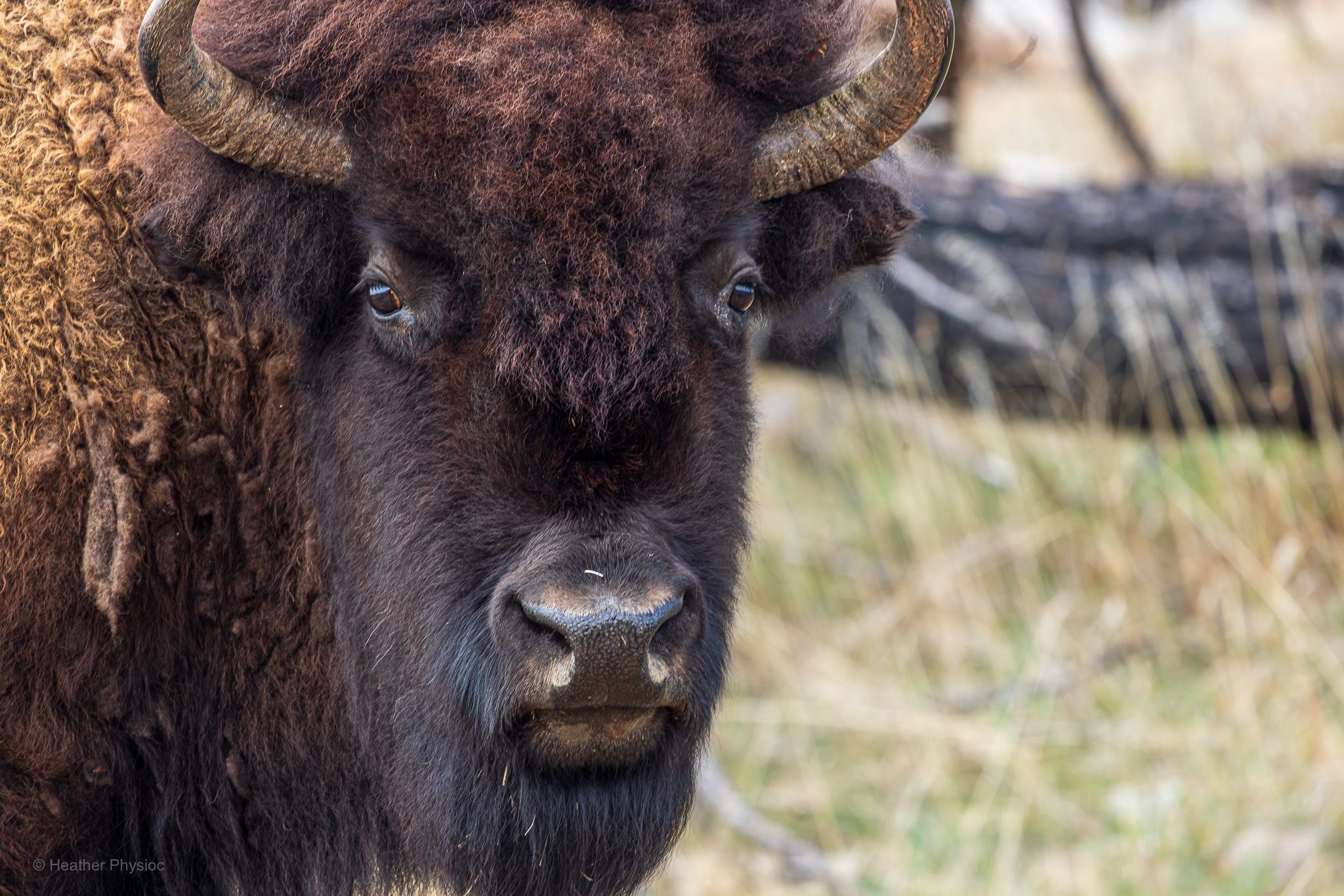

When you stand in the presence of a bison, watching a mud-dusted bull moving through the grass or a calf with its bright orange coat running alongside, you’re seeing a living piece of North America’s ecological and cultural history, and a glimpse of what these landscapes once were, and could be again.
Once numbering in the tens of millions, the American bison once shaped the Great Plains at a continental scale through grazing, wallowing, and moving in vast herds. These animals influenced everything from plant communities to the wildlife that depended on them. Their presence helped build and maintain one of the most productive ecosystems in North America.
Indigenous peoples hunted bison sustainably for thousands of years. Then, in the 1800s, Euro-American commercial hunters, driven by demand for hides and supported by railroads and U.S. expansion, killed them at industrial scale, often with federal policy encouraging the destruction of herds to weaken Plains Indigenous nations.
That widespread slaughter and habitat loss pushed bison to the brink of extinction, reducing a population of roughly 60 million to fewer than 1,000 animals. At one point, only a small group of truly wild bison remained, holding on inside Yellowstone. It remains one of the most dramatic wildlife declines in human history.

Their recovery is equally remarkable. Through conservation efforts and decades of protection and management, bison have rebounded to roughly half a million animals in the United States today. The species now stands as a national symbol of resilience and a landmark conservation success.
But their story isn’t finished. Most bison today live in fenced or managed herds, and only a small fraction are truly wild, free-ranging populations shaping the land as they once did. Restoring connected, genetically healthy herds across wild landscapes remains one of the central challenges in modern conservation.
Species: Bison
Also Known As: Tatanka, iinnii, American bison, and, incorrectly, "buffalo"
Quick Facts About the Bison

- Order: Artiodactyla (Even-toed ungulates)
- Family: Bovidae (Cattle, antelope, goats)
- Genus: Bison
- Species: Bison bison
- Subspecies & Varieties:
- Plains bison (B. b. bison)
- Wood bison (B. b. athabascae)
- Size & Weight:
- Females are smaller, typically weighing 800 to 1,200 pounds, and standing about 4 to 5 feet tall at the shoulder.
- Males are larger, weighing 1,400 to more than 2,000 pounds, and standing about 5 to 6.5 ft tall at the shoulder.
- Lifespan: 15 to 20 years in the wild
Bison Characteristics

- Appearance: Massive, shaggy mammals with a large shoulder hump, thick fur on the front half, and shorter hair on the rear. Both sexes have short, curved horns. Dark brown coats thicken in winter; calves are born bright orange (“red dogs”).
- Horns & Hooves: Curved horns for defense and dominance. Large, cloven hooves support their weight, allow long-distance travel, and help them dig through snow for food.
- Diet: Herbivores. Primarily graze grasses and sedges, with forbs and some woody plants. As ruminants, they digest tough plant material efficiently. Their grazing shapes grassland ecosystems.
- Commonly Seen With: Prairie dogs, pronghorn, and grassland birds like meadowlarks and cowbirds. Scavengers such as coyotes and ravens often follow.
- Natural Predators: Wolves and grizzly bears, usually targeting calves or weakened individuals. Healthy adults are powerful and difficult to take down.

Bison Range & Habitat


- Current Range: Fragmented populations across the U.S. and Canada in protected areas, tribal lands, and managed herds. Major strongholds include Yellowstone, Custer State Park, and Wood Buffalo National Park. Most herds are isolated, not part of a continuous population.
- Origin: Endemic to North America. Once one of the continent’s dominant large mammals, shaping grasslands for thousands of years.
- Elevation Range: From lowland prairies to ~9,000 feet in elevation. Highly adaptable to heat, cold, and varied terrain.
- Habitat: Grasslands, prairies, and open plains dominated by grasses and sedges. Wood bison also use boreal forests, including meadows, wetlands, and forest openings. Require water and large, open space.
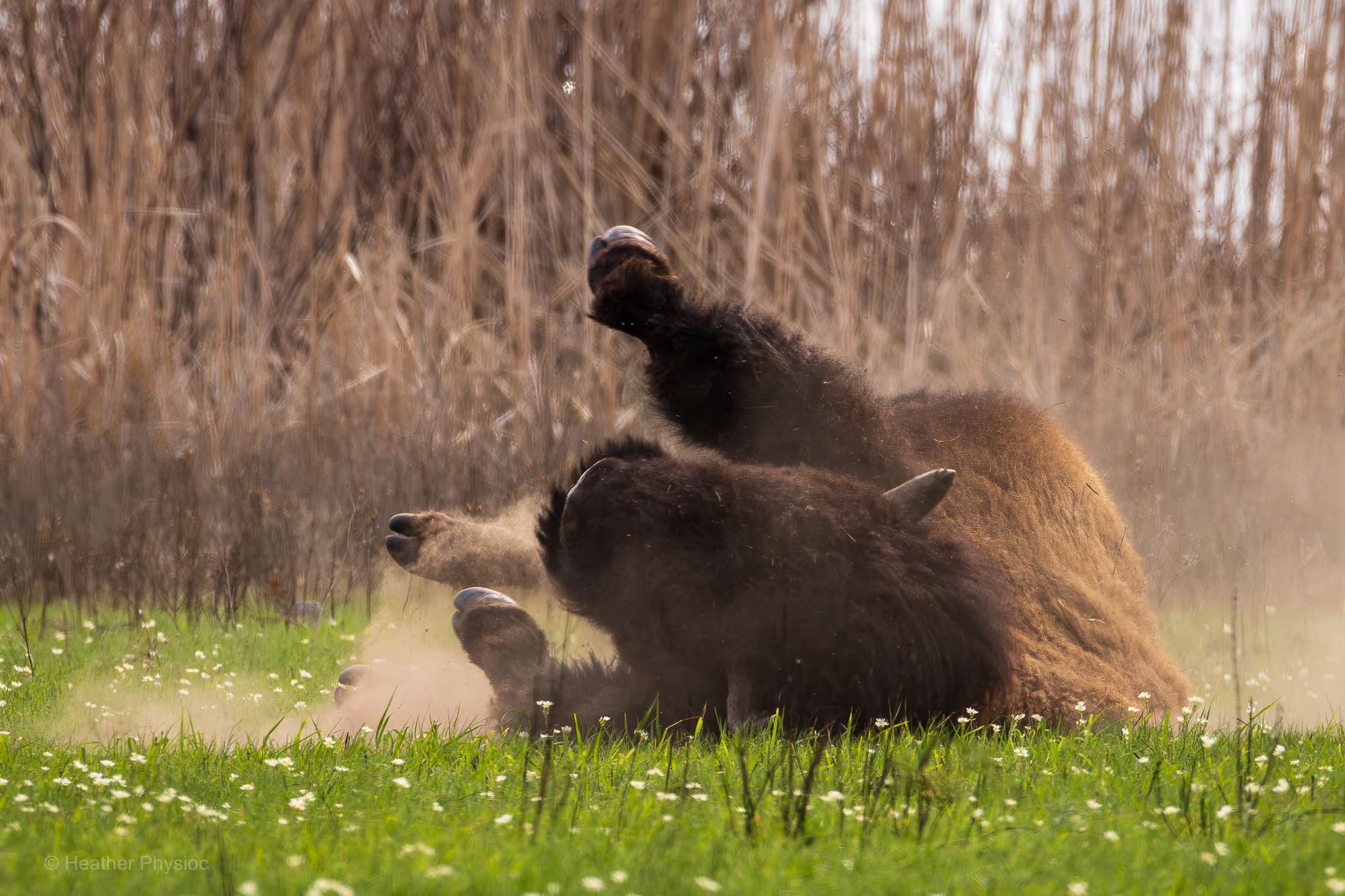
- Role in Landscape: Keystone grazers and ecosystem engineers. They shape plant communities, disperse seeds, and create habitat through wallowing, creating small depressions that collect water and support other species.
- Seasonal Movement: Highly mobile, but not true migrants. Move in response to food, water, and weather, seeking fresh grass in warmer months and pushing through snow in winter. Today, movement is often limited by fencing and fragmentation.
Bison Mating & Courtship
- Social Structure: Herd-based. Females and calves group together; males are solitary or in small groups except during breeding season.
- Sexual Maturity: Both females and males mature at age 2 to 3 years, but males typically do not breed successfully until 5 to 6 years of age due to the competition
- Mating System: Polygynous, dominant males mate with multiple females
- Mating Season (Rut): July to September
- Courtship & Competition: Bulls bellow, display strength, and fight for dominance, then guard receptive females until mating occurs.

Bison Reproduction
- Gestation: About 9 to 9.5 months
- Birth Timing: Spring, when grass is growing, typically April to June
- Calves at Birth: Usually one calf per year, weighing between 30 and 70 pounds, with bright orange fur that earns them the nickname "red dog"
- Growth & Care: Calves can stand within hours, begin grazing within weeks, and nurse for 7 to 10 months
- Independence: Stay close to their mothers for about a year, learning how to move with the herd

Bison Conservation Status
“Near Threatened”
(Last assessed by the IUCN in 2016)
Once numbering in the tens of millions, bison were driven to near extinction in the late 1800s, with fewer than 1,000 animals remaining. Today, roughly 400,000 to 500,000 exist, but most are managed in commercial or fenced herds. Only a small fraction live in conservation herds that function as wild, free-ranging populations. Recovery is a major conservation success, but restoring genetically healthy, connected herds across large landscapes remains an ongoing challenge.
Bison Wildlife Snapshot Infographic
This infographic offers a quick look at the bison's defining traits, conservation status, and vital role as an iconic large mammal on the North American landscape.

Bison Coloring Sheet & Activities for Kids
Download and print this free bison worksheet and coloring page to help kids learn about bison habitat, diet, life cycle, and conservation through hands-on activities that build science knowledge, vocabulary, and curiosity. Perfect for classrooms, homeschool, libraries, and nature-loving families, these printable American bison activities turn learning about America’s national mammal into an engaging, screen-free experience.
 (opens in new tab)
Sources (Alphabetical)
- American Bison Society — Bison Conservation History
- Encyclopaedia Britannica — American Bison
- IUCN Red List of Threatened Species — Bison bison
- National Park Service — Bison (Yellowstone & U.S. Parks)
- Parks Canada — Wood Bison
- Smithsonian’s National Zoo & Conservation Biology Institute — American Bison
- U.S. Department of the Interior — American Bison (National Mammal)
- U.S. Fish & Wildlife Service — American Bison
- Wildlife Conservation Society — Bison
- Yellowstone National Park — Bison Ecology & Management


