
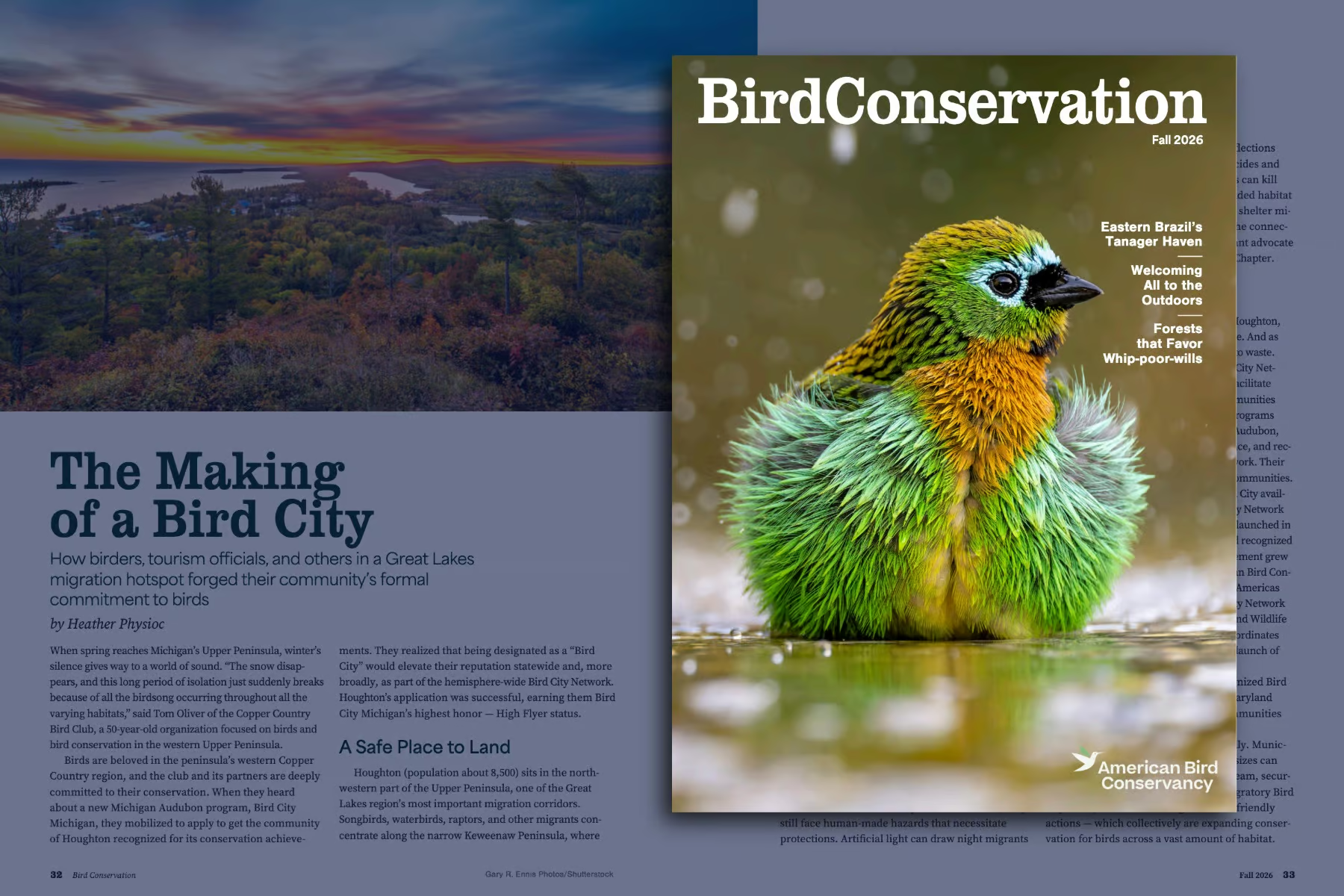
HOUGHTON, Michigan — My latest story — published in the Fall 2026 edition of American Bird Conservancy’s Bird Conservation magazine (pages 32-37) — is a feature examining how the City of Houghton and a coalition of local partners united to earn Michigan’s Upper Peninsula its very first Bird City designation, and the first in the state to achieve High Flyer status.
With North America having lost nearly three billion birds since 1970, stopover refuges along the Great Lakes have never been more critical. It is a hopeful, actionable look at how communities of any size can pool their strengths to protect migratory birds along one of the continent’s most high-stakes migration corridors. Come behind the scenes with me.
Read the full story in Bird Conservation → “The Making of a Bird City”
Behind the Story
To understand why the narrow Keweenaw Peninsula is a life-or-death pitstop for migrating birds, you first have to grasp the scale of Lake Superior. Projecting roughly 65 miles northeast into the world’s largest freshwater lake by surface area, the peninsula acts as a natural geographic funnel along the Great Lakes migration corridor. As Michigan Technological University avian ecologist Jared Wolfe put it during our interviews, Lake Superior “functionally serves as an inland ocean.”
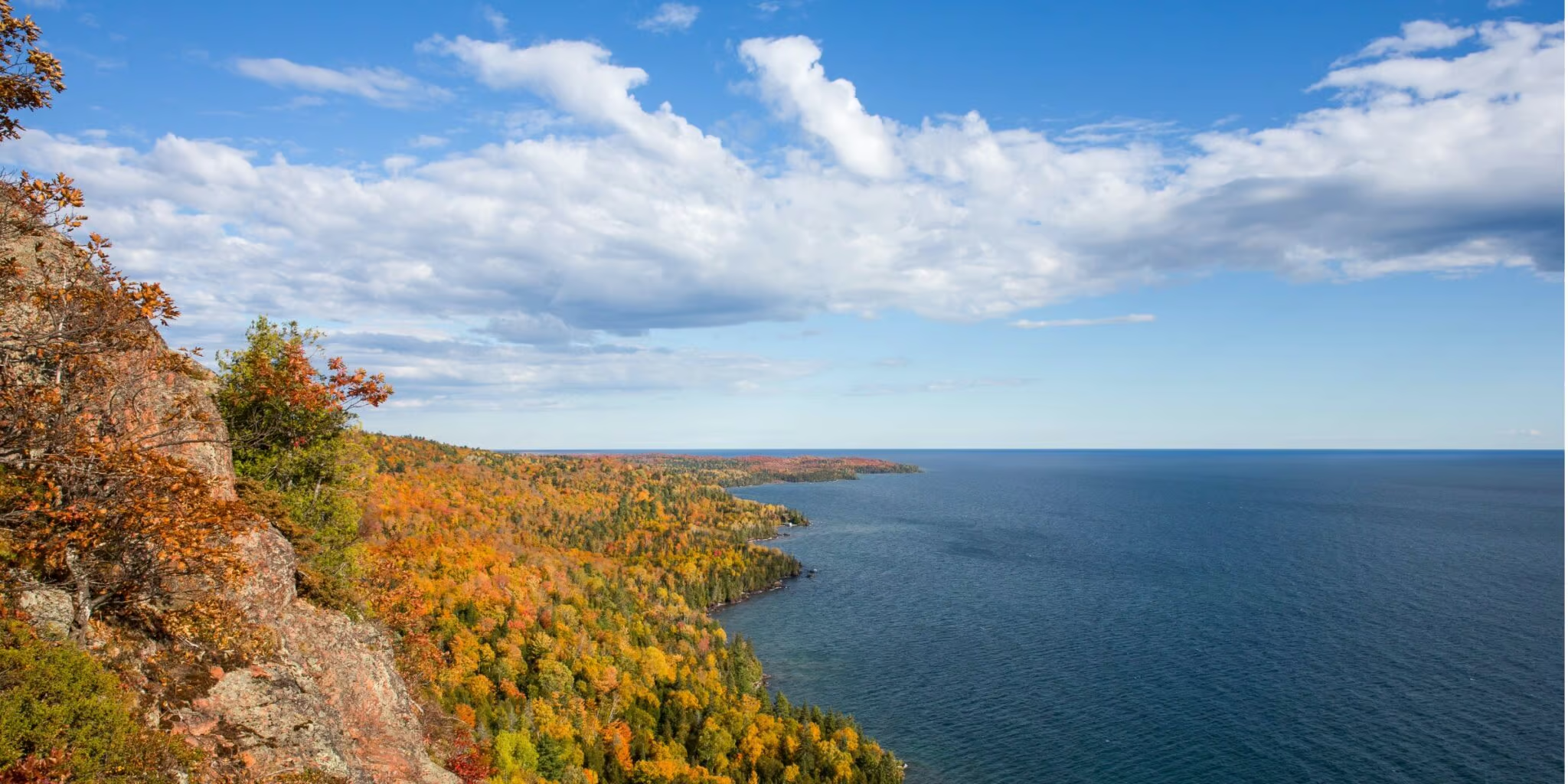
Every spring and fall, at least 300 resident and migratory bird species — from 18 species of raptors riding the daytime updrafts over Brockway Mountain to declining long-eared owls and nearly 100 songbird species — rely on the Keweenaw’s dark night skies, coastal forests, and wetlands to rest and refuel before or after crossing that barren expanse of open water. When songbirds hit bad winds out over the lake, they execute dramatic mid-air “U-turns” back to the peninsula’s shorelines, crowding into the trees to replenish their fat reserves until nightfall offers another window to cross. Yet even in a landscape as relatively intact as the Upper Peninsula, human-made threats — from artificial light pollution and reflective glass to free-roaming outdoor cats, lead tackle, and invasive shrubs like glossy buckthorn and Japanese barberry — threaten to unravel that ecological safety net.
What drew me most to reporting this story was seeing how a community translates overwhelming continental bird declines into hyper-local action. When Michigan Tech professor David Flaspohler first brought the idea of applying for Bird City designation to Visit Keweenaw, it didn’t require inventing conservation from scratch. Instead, the application process became a catalyst that united an extraordinary local coalition: Copper Country Bird Club, Keweenaw Invasive Species Management Area (KISMA), Keweenaw Land Trust, Keweenaw Outdoor Recreation Coalition, Keweenaw Wild Bird REC, Wild Ones Keweenaw Chapter, Michigan Technological University, The Nature Conservancy, Visit Keweenaw, and Houghton municipal leaders.
Over the course of reporting this piece, I spoke with 15+ sources across Michigan and the broader Bird City Network — including avian ecologists, wildlife rehabilitators, invasive species coordinators, native plant advocates, tourism leaders, and state coordinators from Texas and Iowa. Each brought a different piece of the puzzle, from acoustic monitoring and collision-deterrent research to yanking out invasive shrubs so native caterpillars can feed the 96 percent of terrestrial bird species that rely on insects to raise their young.
Houghton ultimately documented 30 of Michigan’s 90 recommended bird-friendly actions, tripling the standard minimum, and helped launch the Keweenaw region’s now-annual Spring on the Wing migratory bird festival. I’m grateful to everyone who shared their field research, frontline experiences, and lessons learned for communities everywhere looking to build their own flock.
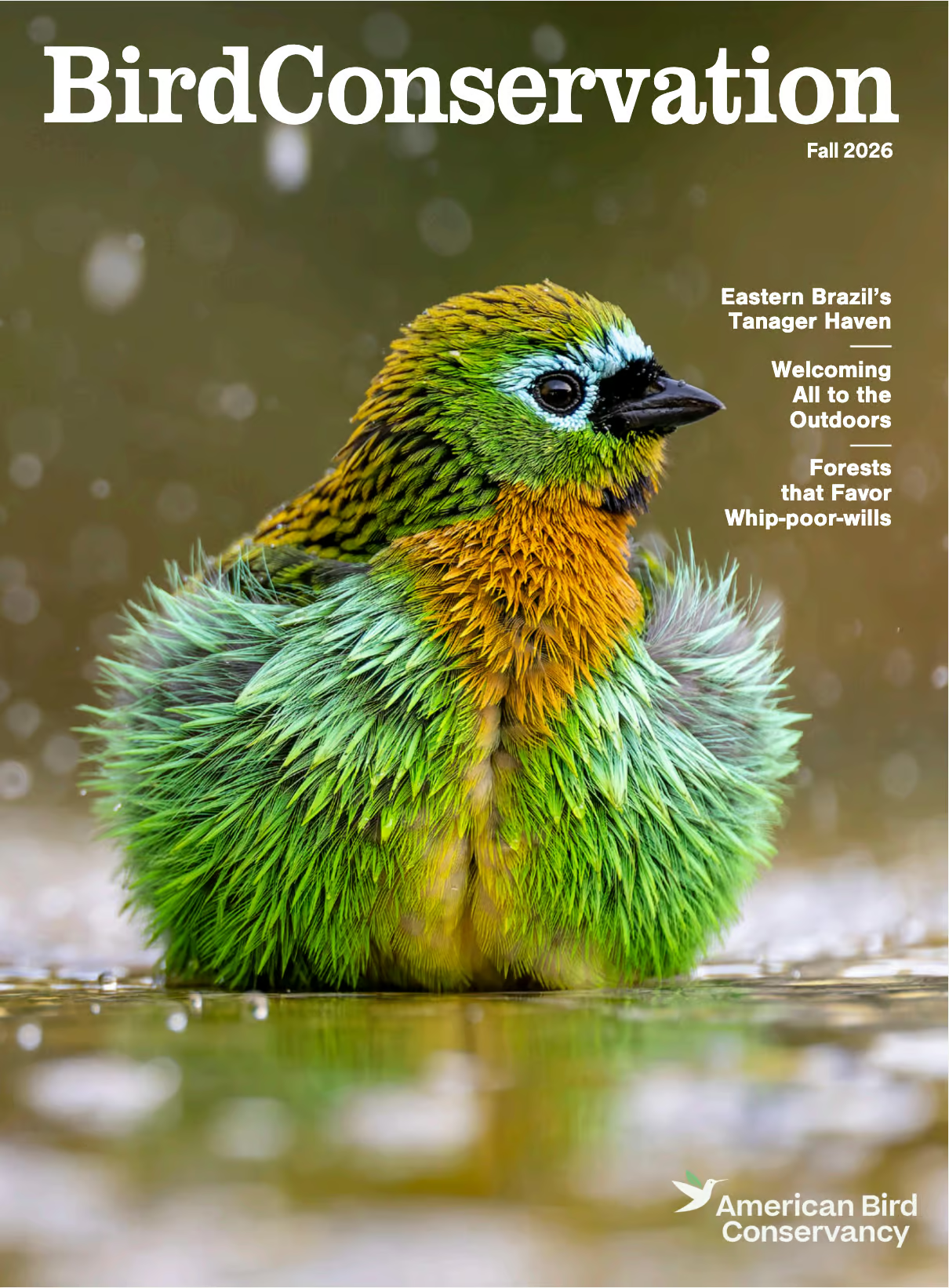
About Bird Conservation Magazine
Bird Conservation is the flagship quarterly publication of the American Bird Conservancy, delivering photography and in-depth reporting on wild bird conservation, habitat protection, and rare species recoveries across the Western Hemisphere. Each issue highlights on-the-ground fieldwork, emerging conservation science, and practical ways readers can protect birds in their own communities. My editor was the excellent Matt Mendenhall.
About American Bird Conservancy
Launched in 1994, the American Bird Conservancy is an international nonprofit dedicated to conserving wild birds and their habitats across the Western Hemisphere, acting as a practical, science-driven conservation leader alongside local communities, Indigenous groups, governments, and partners such as the Migratory Bird Joint Ventures. Its efforts span four strategic outcomes: preventing extinctions, reversing population declines across vast BirdScapes landscapes, curbing human-caused hazards like glass collisions, predation by cats, and toxic pesticides, and growing the broader conservation movement. Together, these initiatives protect 1.1 million acres across more than 100 reserves in 15 countries, improve management on over 9 million acres of U.S. habitat, and benefit 3,000 bird species — or an estimated 30 percent of the world’s total.


